
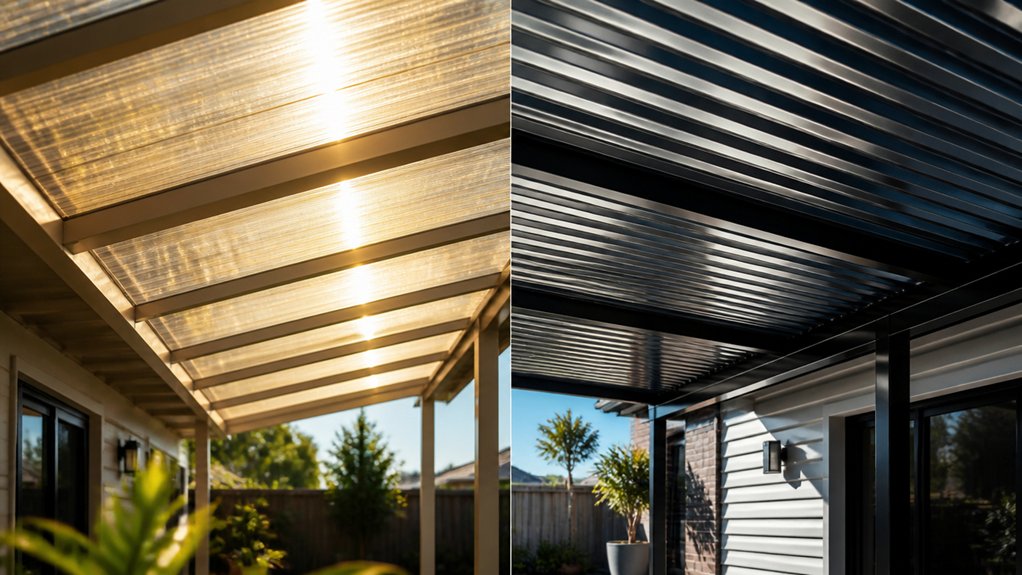
Polycarbonate and metal represent the two primary patio roofing options available to homeowners today. Each material brings distinct strengths to the table, making the selection process more about matching your specific needs than choosing an objectively superior product.
Polycarbonate roofing wins on affordability and light transmission. You’ll appreciate how natural sunlight filters through while staying protected from harsh UV rays. This material typically lasts 10 to 20 years and requires only moderate maintenance to keep it looking good.
Metal roofing demands a larger initial investment but rewards you with exceptional longevity. A metal roof can last 20 to 50 years with minimal upkeep, making it a smart choice for those planning to stay in their homes long-term. The durability factor alone justifies the higher upfront cost for many homeowners.
Several factors should guide your final decision.
Consider your budget constraints, how long you want the roof to last, your preferred aesthetic, and whether environmental impact matters to you. Taking time to weigh these elements ensures you’ll select the roofing material that truly fits your situation.
Durability: How Long Do Polycarbonate and Metal Last?
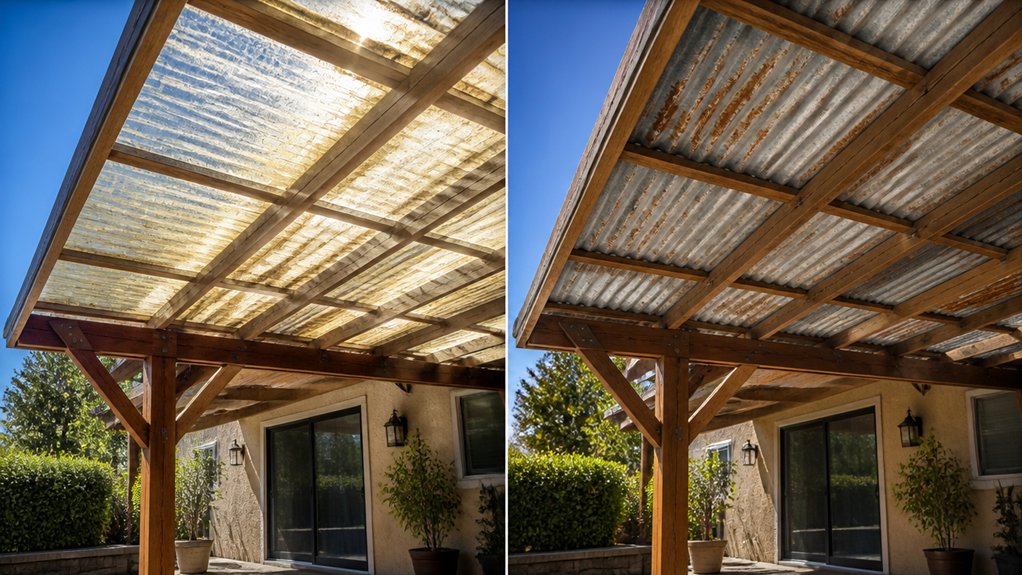
Longevity stands as a critical factor when choosing patio roofing material.
Polycarbonate panels typically last 10 to 20 years, depending on UV protection quality and maintenance practices. Metal roofing, particularly aluminum and steel options, generally lasts 20 to 50 years with proper care.
Metal’s Superior Lifespan****
Metal materials resist cracking, warping, and discoloration better than polycarbonate. Metal’s advantage comes from its natural resistance to degradation and weather exposure. These roofs handle extreme temperatures and heavy snow loads more effectively.
Polycarbonate’s Trade-offs****
Polycarbonate yellows and becomes brittle over time, requiring eventual replacement. It does offer lighter installation, but sacrifices long-term durability for this benefit.
Keep Your Roof in Top Shape
Both materials benefit from regular cleaning and inspection. Simple maintenance extends the life of either option significantly.
Making Your Choice
Consider your budget timeline and climate conditions when evaluating these materials. Metal costs more upfront but lasts longer. Polycarbonate works better if you need a faster, budget-friendly installation.
Cost Breakdown: Polycarbonate vs Metal
Cost Breakdown: Polycarbonate vs Metal****
Polycarbonate panels run $15 to $25 per square foot with installation included. Metal roofing costs $20 to $35 per square foot, depending on what type and thickness you choose. For a typical 200-square-foot patio, expect to pay $3,000 to $5,000 for polycarbonate or $4,000 to $7,000 for metal.
Installation and Maintenance
Polycarbonate needs special fastening systems, while metal roofing demands skilled contractors. Both add to your upfront costs. Over time, polycarbonate requires regular cleaning and occasional panel replacements. Metal needs periodic inspections and rust prevention treatments instead.
Which Investment Makes Sense?
Metal generally lasts longer, which can offset the higher starting price. Your climate, local labor costs, and how long you want the roof to last all matter. Think about your specific situation before deciding which material fits your budget and needs best.
Aesthetics and Light: What’s the Visual Difference?
Aesthetics and Light: What’s the Visual Difference?
How Light Changes Your Patio Feel****
Polycarbonate panels let natural light shine through, making your patio bright and welcoming. They reduce those annoying shadows you get with solid roofs. Clear panels give you the most light, while tinted or frosted options add privacy and cut down glare.
Metal roofing blocks sunlight completely, so the area underneath stays darker. You’ll need lights on once evening hits. Polycarbonate might actually help you skip some daytime lighting costs.
The Look and Style Factor
Polycarbonate has a sleek, modern feel that works with most home styles. Metal roofing gives off either an industrial vibe or a more traditional look, depending on the style you pick.
Colors play a big role too. Polycarbonate comes in clear, bronze, gray, and opal. Metal gives you copper, charcoal, silver, and other options. Pick whichever matches your home’s personality and the atmosphere you want to create.
Weather Resistance and Long-Term Upkeep
Weather Resistance and Long-Term Upkeep****
Polycarbonate panels handle UV rays and hail pretty well, but they can yellow or cloud after 10-15 years of sun exposure. Metal roofing (aluminum or steel) stands up to extreme temperatures, heavy snow, and salty air without any real damage. The trade-off is that metal needs regular checks for rust, especially near the coast.
Keeping polycarbonate clear takes occasional cleaning to stop algae growth. Metal roofing needs less frequent care overall, though you may want to repaint or reapply sealant every 10-20 years. For most climates, metal edges out polycarbonate when it comes to durability and hassle-free maintenance.
Installation and Labor Costs
Polycarbonate panels are quicker and cheaper to install. You’ll spend $1,500 to $3,000 on labor for a standard patio since contractors need fewer specialized tools.
Metal roofing requires skilled workers and equipment like seaming machines. Expect to pay $2,500 to $5,000 in labor costs because the work involves precise measurements, custom cuts, and careful fastening to prevent leaks.
Installation methods differ too. Polycarbonate uses simple brackets and adhesive strips. Metal needs overlapping seams, flashing, and professional fastening techniques. Get quotes from several contractors in your area, as prices vary by region.
Environmental Impact: What Matters to You?
Environmental Impact: What Matters to You?
Polycarbonate and metal roofing each have different environmental trade-offs. Polycarbonate comes from petroleum and needs fossil fuels to produce. Metal roofing, made from aluminum or steel, wins on recyclability since these materials can be reprocessed many times without wearing down.
Steel roofing often contains 25 to 60 percent recycled content, which cuts down on new mining. The good news about polycarbonate? It lasts 20 to 30 years and resists UV damage, so its long lifespan helps balance out manufacturing impacts. Metal roofing stretches even further at 40 to 70 years.
Both materials help your wallet and the planet by improving insulation. Better insulation means less energy for heating and cooling, which lowers your carbon footprint. Metal recycling programs are easy to find in most places. Polycarbonate recycling, however, remains harder to access in many areas.
Polycarbonate or Metal: Which Suits Your Patio?
Polycarbonate or Metal: Which Suits Your Patio?
Finding Your Best Fit
Once you’ve considered the environmental side, it’s time to focus on what actually works for your space. Your specific situation, budget, and patio usage will guide this decision.
Polycarbonate: Light and Affordable****
Polycarbonate is perfect if you need sunlight to filter through and want to keep costs down. It blocks UV rays effectively, so the area below stays cooler while still letting light in. The downside? It yellows after 10-15 years and needs regular cleaning to stay clear of debris.
Metal: Built to Last****
Aluminum or steel roofing lasts 40+ years with barely any upkeep required. Metal reflects heat well and handles harsh weather much better than polycarbonate. The catch is the higher price tag upfront and the fact that it blocks all light, creating solid shade.
Let Your Climate Decide
Living near the coast? Metal’s corrosion resistance makes it the winner. In areas with scorching sun? Polycarbonate’s light diffusion keeps things comfortable. Your region’s weather patterns should heavily influence your choice.
Make Your Decision
Think about how you’ll actually use your patio and what your budget allows. The right material matches both your lifestyle and your wallet.
Frequently Asked Questions
Can Polycarbonate or Metal Roofing Be Installed Over Existing Patio Structures?
Both polycarbonate and metal roofing can be installed over existing patio structures. Proper assessment of the current framework’s structural integrity is essential. Installation typically requires reinforcement, appropriate fastening systems, and professional evaluation to guarantee safety and compliance with building codes.
What Warranty Coverage Is Typically Offered for Polycarbonate and Metal Roofs?
Just as time tests all things, warranties reveal manufacturers’ confidence in their products. Polycarbonate typically offers 10-year coverage against yellowing and impact damage, while metal roofing provides 20-30 years, including rust and weathering protection, depending on material quality.
How Do Temperature Fluctuations Affect the Expansion and Contraction of These Materials?
Polycarbonate expands and contracts considerably with temperature changes, requiring flexible fastening systems to prevent damage. Metal roofing exhibits less dramatic movement but still needs thermal expansion accommodation. Both materials demand proper installation techniques to manage seasonal fluctuations effectively.
Are Permits Required to Install Polycarbonate or Metal Patio Roofing Locally?
Before crossing that bridge, homeowners should contact their local building department, as permit requirements vary considerably by jurisdiction. Most areas mandate permits for both polycarbonate and metal installations to guarantee structural safety compliance and proper zoning adherence.
Can Either Material Be Easily Repaired or Replaced if Damaged?
Both materials can be repaired or replaced, though with different considerations. Polycarbonate panels are easier to replace individually, while metal roofing requires more specialized skills. Repair costs and complexity depend on damage extent and installation method used.
Conclusion
Metal roofing resembles a sturdy oak tree, enduring decades while polycarbonate functions like seasonal grass, requiring frequent renewal. A homeowner’s 30-year investment in metal costs more upfront but yields lower maintenance expenses and superior durability compared to polycarbonate’s 10-20 year lifespan. Metal’s recyclability and extended performance make it the economically and environmentally sensible choice for long-term patio protection, despite higher initial installation costs.