
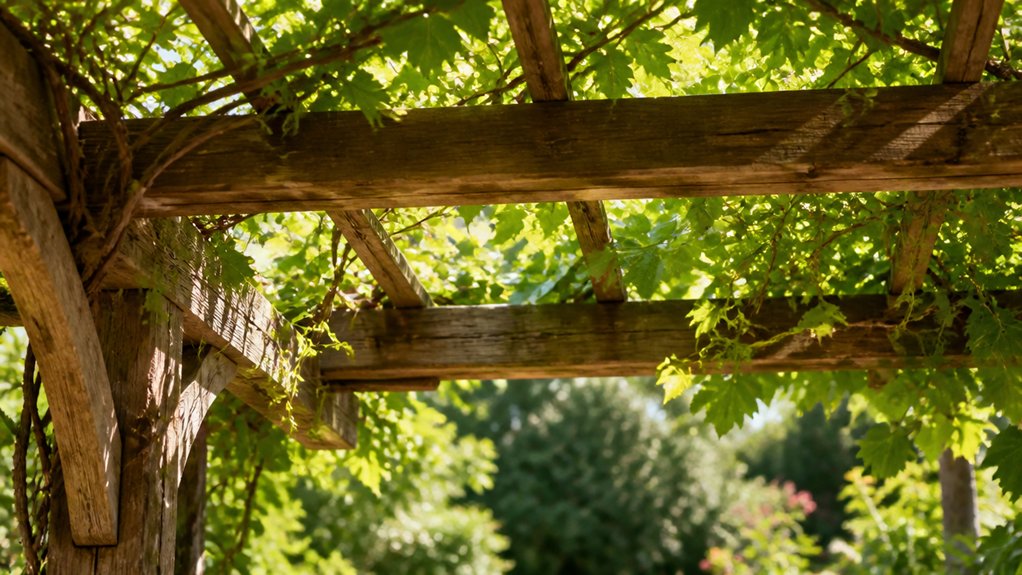
Training climbing plants over a pergola requires understanding several key factors before you even begin. The structure’s light exposure, local climate conditions, and your plant selection will ultimately determine whether your project succeeds or struggles.
Start by assessing your pergola’s location and how much direct sunlight it receives throughout the day. Most climbing plants thrive in conditions ranging from partial shade to full sun, so matching your chosen vines to these conditions is essential.
Proper preparation of the soil and strategic positioning of your plants will set you up for healthy, vigorous growth.
Consistency matters when maintaining your climbing plants. Regular watering, pruning, and training of the vines as they grow will keep your pergola looking intentional rather than overgrown. Tying shoots to the structure’s framework guides growth in the direction you want.
Common obstacles like uneven growth, pest infestations, and structural strain can emerge as your plants mature. However, these challenges have practical solutions worth exploring.
Addressing problems early, whether through targeted pruning or pest management, prevents small issues from becoming larger headaches.
Assess Your Pergola’s Light and Climate Before Choosing Plants
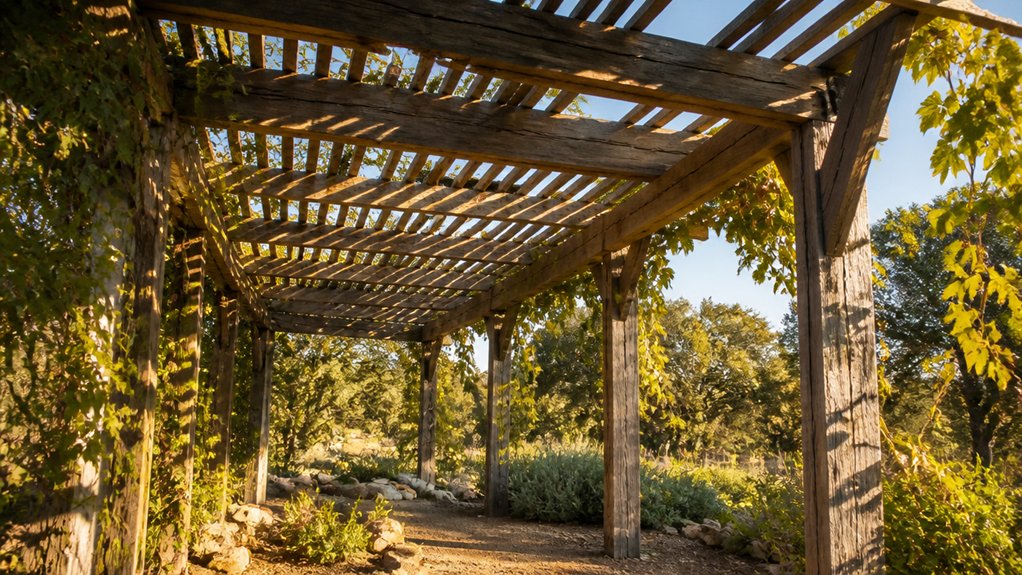
Before picking climbing plants for your pergola, take time to evaluate two important environmental factors: light and climate.
Understanding Your Pergola’s Light
Your pergola’s sun exposure depends on which direction it faces and what surrounds it. South-facing pergolas soak up full sun all day. North-facing ones stay mostly shaded. East and west sides get partial sun.
Different plants need different amounts of light. Clematis and climbing roses love full sun spots. If your pergola is shady, ivy and climbing hydrangea are better choices.
Checking Your Climate Zone
Your area’s hardiness zone tells you which plants can survive your winters. Each zone has minimum temperatures that plants must tolerate to thrive. If you live in zone 5, tropical passionflower won’t survive since it needs zone 6 minimums.
Knowing your zone prevents wasted money on plants that won’t make it through your first winter.
Why This Matters
Taking these two steps upfront saves you frustration later. You’ll choose plants that actually thrive on your pergola instead of struggling or dying. Success starts with matching plants to your specific conditions.
Choose the Right Climbing Plants for Your Pergola
Once light and climate conditions are identified, the next step involves selecting specific plants that will grow well on the pergola.
Different climbing vines attach to structures in unique ways. Clinging vines like ivy and climbing hydrangea use aerial rootlets or adhesive discs to stick directly to surfaces. Twining vines such as clematis and honeysuckle wrap around supports as they grow. Tendril climbers like passion flower and grape vines grip structures with specialized leaf appendages.
Consider mature vine size, growth rate, and maintenance requirements when making selections.
Fast-growing varieties like morning glory blanket pergolas quickly but need regular pruning to stay under control. Slower options such as ivy build steady coverage with minimal upkeep. For extra visual appeal, flowering vines deliver beautiful blooms along with their foliage.
Prepare Your Pergola for Optimal Plant Training
Check Your Structure First
Your pergola needs to be strong enough to handle mature climbing plants. Heavy varieties like clematis, climbing roses, and wisteria add significant weight over time. Before you plant anything, inspect wooden posts, beams, and crosspieces for rot, damage, or weak spots.
Add Support for Climbing
Vines need something to grab onto as they grow. Install horizontal wires or trellising across your pergola to give plants secure attachment points. Space these elements four to six inches apart so stems and tendrils can wrap around them easily.
Consider Sunlight and Drainage
Most climbing plants thrive with six to eight hours of direct sun each day. Take a moment to observe your pergola throughout the day and note which areas stay sunny. Also check that water drains well underneath and around the structure. Poor drainage leads to root rot and fungal problems that damage plants.
Train Young Vines Horizontally Across Your Structure
Bend new shoots gently toward horizontal positions as they grow. Secure them with soft ties or clips to keep them safe from damage. This simple step maximizes sunlight across your entire structure and encourages fuller, more even blooming.
Clematis, climbing roses, and honeysuckle all thrive with horizontal training in their first season. Weave the shoots through your pergola’s lattice or beams, keeping them parallel to the ground instead of letting them climb straight up.
Check your vines regularly to ensure they’re secure but not squeezed too tight. As side branches develop naturally, they’ll reach upward and create beautiful layered coverage. You’ll notice significantly more flowers and a much more attractive structure by season’s end.
Prune to Boost Branching and Even Coverage
Prune to Boost Branching and Even Coverage
Strategic pruning removes weak or crossing stems and directs energy to stronger growth. This creates fuller coverage across your pergola. Prune during late winter or early spring when plants are dormant. Cut back main stems to encourage lateral branches and denser foliage.
Remove dead wood, damaged sections, and inward-growing shoots to improve air circulation. This reduces disease risk significantly. Clematis, climbing roses, and ivy all respond beautifully to this approach. Focus on sparse areas to promote branching where you need it most.
Light pruning during the growing season keeps your plants shaped and prevents overgrowth. Heavy pruning triggers vigorous new growth, while gentle trimming maintains what you already have. Regular attention creates balanced coverage with no bare patches or tangled mess.
Keep Trained Climbers Healthy and Under Control
Watch for Common Problems****
Check your vines regularly for spider mites, aphids, powdery mildew, and root rot. Catch these issues early by inspecting leaves, stems, and soil every couple of weeks. Remove any affected leaves and stems right away to stop problems from spreading.
Support Your Vines Properly
Make sure vines stay securely attached to your pergola or trellis. Retrain any loose growth back onto the structure. Thin out crowded sections so air can flow through better, which keeps disease at bay.
Water and Feed Wisely
Water deeply but let the soil dry out a bit between waterings. This prevents root problems while keeping plants happy. Feed with balanced fertilizer during the growing season, but skip the extra nitrogen since it creates weak, floppy growth.
Prune and Shape Regularly
Remove dead wood and branches that cross over each other. This keeps your climber looking neat and healthy. Pay attention to how weight spreads across the pergola to avoid putting too much strain on any one spot.
Keep Everything in Balance
These habits prevent overgrowth that can damage your structure or crowd nearby plants. Regular care means your climbers stay vigorous without becoming a problem.
Fix Common Climbing Plant Training Issues
Addressing Growth and Coverage Problems
Climbing plants sometimes struggle with weak growth, sparse foliage, or patchy coverage. This usually happens when stems aren’t trained properly from the start or when main stems lack enough horizontal spacing.
The fix is straightforward: guide young shoots sideways instead of upward. Horizontal positioning naturally triggers more lateral branches and a fuller plant overall.
Untangling Stems for Better Health
When stems cross and tangle, they block air and light from reaching inner leaves. You’ll notice yellowing and leaf drop in these shadowy spots. Take time to identify problem branches and gently redirect them along your support structure using soft ties.
Dead wood, crowded canes, and stems pointing the wrong way all need selective pruning. Remove what doesn’t serve your design.
Preventing Disease Through Better Air Flow
Powdery mildew and spider mites thrive in stagnant air. Better spacing and pruning naturally solve this by improving ventilation around the plant. These simple steps reduce pest pressure without extra treatments needed.
Frequently Asked Questions
How Long Does It Typically Take for Climbing Plants to Fully Cover a Pergola?
Climbing plants typically require two to three years to fully cover a pergola, depending on the species selected, growing conditions, and initial plant size. Fast-growing varieties may achieve complete coverage within eighteen months.
What Is the Best Time of Year to Start Training Climbing Plants on a Pergola?
Strike while the iron is hot by planting in spring or early summer. This timing allows climbers to establish strong root systems before winter arrives, ensuring vigorous growth and faster pergola coverage during the following growing season.
Can Climbing Plants Damage the Pergola Structure or Foundation Over Time?
Climbing plants can potentially damage pergola structures over time. Their weight, moisture retention, and root systems may weaken wood, cause rot, or shift foundations. Regular maintenance, proper support systems, and choosing lighter vine varieties help minimize structural risks considerably.
How Much Weight Can a Standard Pergola Support When Fully Covered With Plants?
A standard pergola typically supports 20-50 pounds per linear foot when fully covered with mature climbing plants. Weight capacity depends on construction materials, structural design, installation quality, and soil conditions at the foundation.
What Budget Should I Expect for Materials and Plants to Train a Pergola?
Curiously, most homeowners discover that pergola budgets range from $500 to $3,000, depending on structure size and plant selection. Basic materials cost $200–$800, while quality climbing plants add $300–$2,200, making planning essential for financial success.
Conclusion
Training climbing plants requires balancing restraint with encouragement. Young vines need firm guidance, yet gentle handling. Horizontal ties promote growth, while vertical structures provide support. Pruning removes excess while fostering density. Neglect invites pests and weakness, yet excessive intervention damages stems. Success lies in this tension: consistent attention without over-management, strategic cuts without brutality, adequate water without flooding. Properly trained climbers transform pergolas from bare structures into lush, living frameworks.