
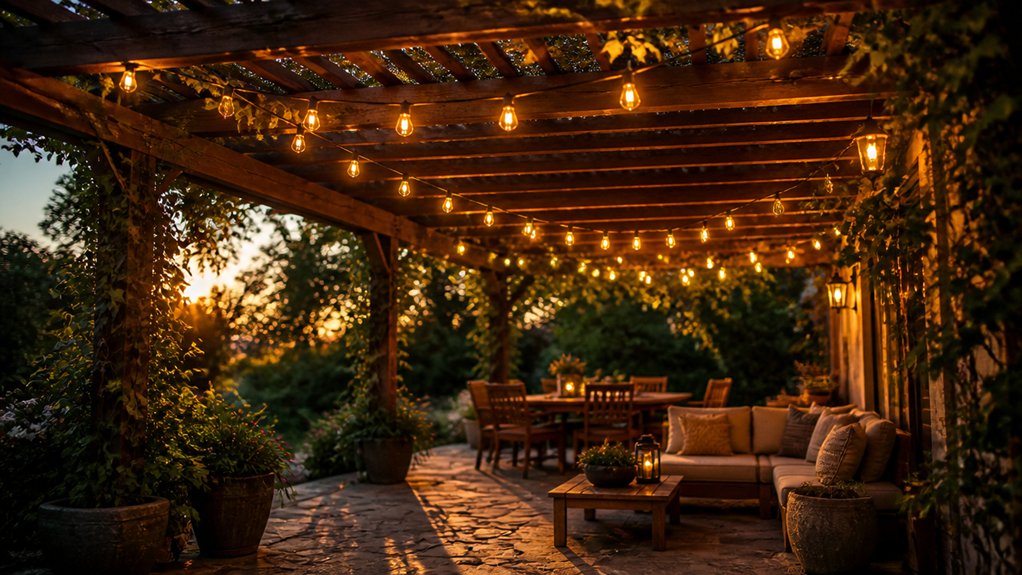
Adding lighting to a pergola starts with understanding what matters most to your project. Budget, atmosphere, and structural capacity all play important roles in determining your best options. Taking time to assess these factors upfront helps you avoid expensive mistakes later.
The range of lighting solutions available is impressive. Solar string lights offer an easy, budget-friendly approach, while recessed fixtures provide a more polished look. Pendant lights, lanterns, and LED strips each bring their own aesthetic and functional benefits to the table.
Before installing anything, check your pergola’s weight capacity and existing electrical infrastructure. These structural considerations directly impact which lighting types will work safely in your space. A quick inspection can prevent damage and ensure your installation lasts for years.
Once you’ve assessed your situation, choosing the right lighting becomes straightforward. Consider how you want the space to feel at night and which installation method fits your comfort level.
Whether you go with simple solar options or more complex wiring, the key is matching your lighting choice to both your space and your goals.
Types of Pergola Lighting: Which Option Fits Your Space
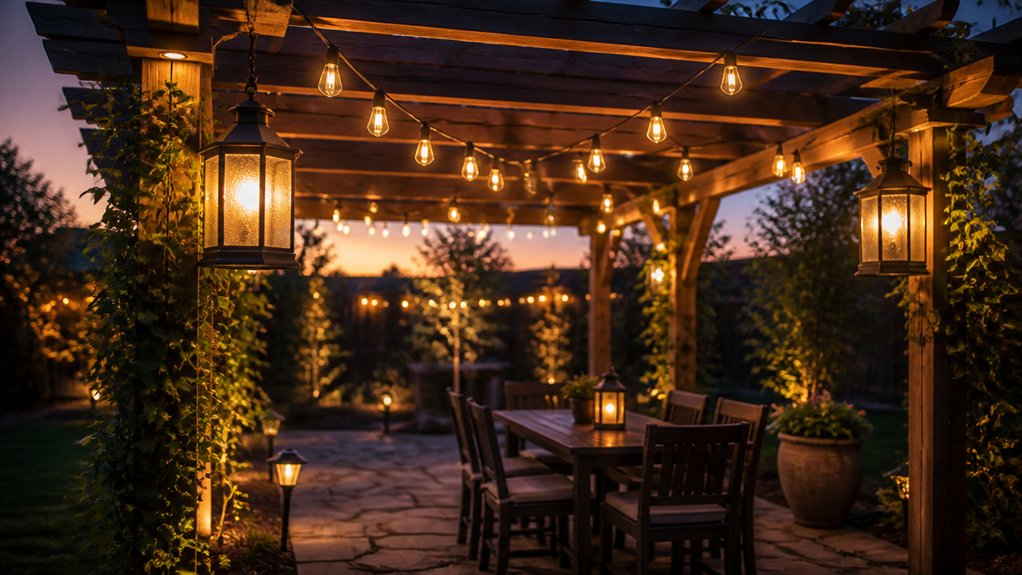
Choosing the Right Lighting
Your pergola’s size, purpose, and current electrical setup guide your lighting choice. Budget and personal style matter too.
Popular Lighting Options
String lights are budget-friendly and look beautiful over residential pergolas. They’re easy to install and create a warm, inviting glow.
Solar-powered lights need no wiring and are kind to the environment. Just set them up and let the sun do the work, though you’ll check them occasionally.
Recessed fixtures give a sleek, modern look for permanent setups. They blend seamlessly into your pergola’s design.
Track lighting lets you aim light exactly where you need it. This works great if you want to highlight specific areas.
Pendant lights hang down to create cozy spots for dining or relaxing. They add character while lighting your space.
Uplighting shines upward to showcase your pergola’s frame and nearby plants. It creates dramatic evening effects.
Budget Matters
Hardwired systems cost more upfront but work reliably for years. Battery and solar options save money initially but may need maintenance or replacements.
Your pergola’s material and surroundings help determine what works best. Consider what fits both your needs and your wallet.
Assess Your Pergola: Structure and Electrical Readiness
Before picking lighting, check two important things: your pergola’s physical condition and its power setup.
Structure Assessment
Start by looking at what your pergola can handle. Check the weight capacity, inspect materials for damage, and find all mounting points. Wood structures might need reinforcement for heavier fixtures, while aluminum usually works fine with standard lights. Look for rot, rust, or cracks to catch problems early.
Electrical Readiness
Next, figure out your power options. Is there an outlet nearby? Can you run wiring along existing conduit? Pergolas close to your house often tap into exterior outlets easily. Distant yard setups need either underground wiring or battery-powered lights instead.
Calculate how much power you’ll need so you don’t overload circuits. This step keeps your system safe and working properly.
Documentation and Planning
Pull out your original pergola plans or building permits if you have them. These documents show structural details and what modifications were already approved. Taking time now prevents expensive fixes later and ensures your lighting setup is both safe and effective.
String Lights: The Step-by-Step Installation
Gather Your Materials
Start by collecting everything you’ll need: bulbs, wiring, clips, and hooks. Make sure your clips and hooks are rated for outdoor use so they can handle weather and wear.
Plan Your Layout
Sketch out where you want the lights to go. Mark the attachment points on your beams and posts so you know exactly where to secure everything.
Choose Your Pattern
String lights typically run along the perimeter of your pergola. You can create loops or zigzag patterns overhead, depending on the look you prefer.
Secure the Lines Properly
Use weatherproof clips or hooks to attach your lights. Keep the tension consistent so nothing sags or looks uneven.
Handle Electrical Connections
Find a nearby outlet or use a weatherproof extension cord. Keep all wiring away from water sources and places where people might trip.
Pick the Right Bulbs
LED string lights are more energy efficient and last longer than incandescent options. They’re also a smart choice for outdoor use.
Know When to Call a Professional
If your layout is complex or you’re unsure about electrical work, hiring a professional is worth the investment. They can handle tricky installations safely.
Recessed and Overhead Fixtures: Professional Installation Basics
A licensed electrician is your best choice for installing recessed lights and overhead fixtures. These projects involve electrical wiring, structural support, and building code requirements that need professional expertise.
Recessed lights sit flush against your pergola’s ceiling or beams for a streamlined look. They deliver focused light exactly where you need it. Pendant lights and chandeliers hang from your structure and work well for lighting larger spaces.
Installation requires running electrical conduit through the pergola frame and setting up junction boxes. Your electrician will connect everything to your home’s main electrical panel. Heavier fixtures may need extra structural support added first.
You’ll need local building permits before starting any work. Check with your municipality about their specific requirements.
Talk with your electrician about where you want lights placed and how bright you need them. Ask about dimming options too. These conversations ensure your setup works safely and looks exactly as you imagined.
Solar and Battery Lights: Installation and Setup
Why Choose Solar and Battery Options
Skip the electrical wiring and building permits with solar and battery-powered lights. They’re a simpler path to a well-lit outdoor space without the hassle of hardwired fixtures.
How Solar Lights Work
Solar options charge naturally during daylight hours and turn on automatically at dusk. Deck lights and string lights are popular picks. Battery-powered lights need periodic replacement or recharging, depending on your model.
Installation Basics
Mounting is straightforward. Use brackets, adhesive strips, or screws to attach lights to pergola posts, railings, or beams. Solar lights must sit in direct sunlight to charge properly. Battery lights offer more flexibility and can go almost anywhere.
Popular Light Types
LED string lights create ambiance across your space. Solar pathway lights mark walkways and garden edges. Motion-activated spotlights add security and convenience.
Cost and Maintenance Benefits
These options cost less upfront than hardwired systems. You’ll skip trenching and avoid hiring a professional electrician. Seasonal maintenance is minimal: clean solar panels occasionally and swap out batteries as needed.
Design Your Pergola Lighting Layout: Spacing and Brightness
Positioning Your Lights
Start by mapping your pergola on paper. Mark where each light will go and note the total lumens you’ll need. Lights work best when spaced 4 to 6 feet apart along beams. This spacing creates even light without dark gaps between fixtures.
Pay extra attention to corners and seating areas. These spots benefit from a bit more brightness to feel inviting and functional.
Getting the Brightness Right
Lumens measure how bright your lights are. Different areas need different levels. Path lighting typically needs 50 to 100 lumens so people can walk safely. Accent lights use just 20 to 40 lumens to highlight features like plants or architectural details.
Overhead ambient lighting should deliver 100 to 200 lumens. This range works well for comfortable gathering spaces where people chat and relax. Plan your layout carefully to avoid overly bright or dim sections throughout your structure.
Year-Round Maintenance: Seasonal Care Tips
Spring
Check your fixtures for any winter damage and clean away debris. Test all connections to make sure everything powers up properly.
Summer
Heat can loosen hardware, so tighten any loose parts. Keep lens covers clean for maximum brightness and visibility.
Fall
Remove leaves and branches that cast shadows on your lights. Look over wiring for signs of wear and get fixtures ready for colder months ahead.
Winter
Ice buildup and snow can damage fixtures, so clear them away regularly. Test battery-powered lights to ensure they still work when needed.
Year-Round Tasks
Replace LED bulbs based on how often you use them. Check weatherproofing seals once a year, especially around mounting areas.
Wipe down metal components occasionally to prevent rust and corrosion. These simple habits keep your lights bright and functional no matter the season.
Frequently Asked Questions
What Is the Average Cost of Installing Pergola Lighting Systems?
The average cost of installing pergola lighting systems typically ranges from $500 to $3,000, depending on the complexity of the design, type of fixtures chosen, and whether professional installation is required versus DIY approaches.
Can I Install Pergola Lighting Myself or Do I Need a Professional Electrician?
Like a bridge between ambition and capability, homeowners can install basic solar or low-voltage lighting independently. However, hardwired electrical systems require a licensed electrician to guarantee safety compliance and proper installation standards.
Which Pergola Lighting Option Uses the Least Amount of Electricity?
Solar-powered lights consume the least electricity, as they harness energy directly from the sun and require no grid connection. LED solar string lights or solar spotlights offer an eco-friendly, cost-effective illumination solution for pergolas.
How Long Do Pergola Lighting Fixtures Typically Last Before Needing Replacement?
Most pergola lighting fixtures typically last between five to twenty years before requiring replacement. LED lights coincidentally offer the longest lifespan, often lasting twenty-five thousand to fifty thousand hours, while traditional incandescent bulbs need more frequent replacement.
What Permits or Building Codes Apply to Outdoor Pergola Electrical Installations?
Electrical codes vary by jurisdiction, but most require permits for outdoor installations. Building codes typically mandate weatherproof fixtures, proper grounding, adequate wire gauging, and GFCI protection. Local authorities should be consulted before installation.
Conclusion
Pergola lighting transforms outdoor spaces through careful planning and selection. While permanent fixtures require professional electricians, solar options offer immediate installation without wiring. Budget constraints may limit choices, yet even modest string lights provide functional illumination. Structural assessment prevents costly damage, though some pergolas accommodate heavy recessed units effortlessly. Seasonal maintenance sustains performance across weather changes. The right lighting approach balances aesthetic preferences with practical constraints, creating usable outdoor areas year-round.