
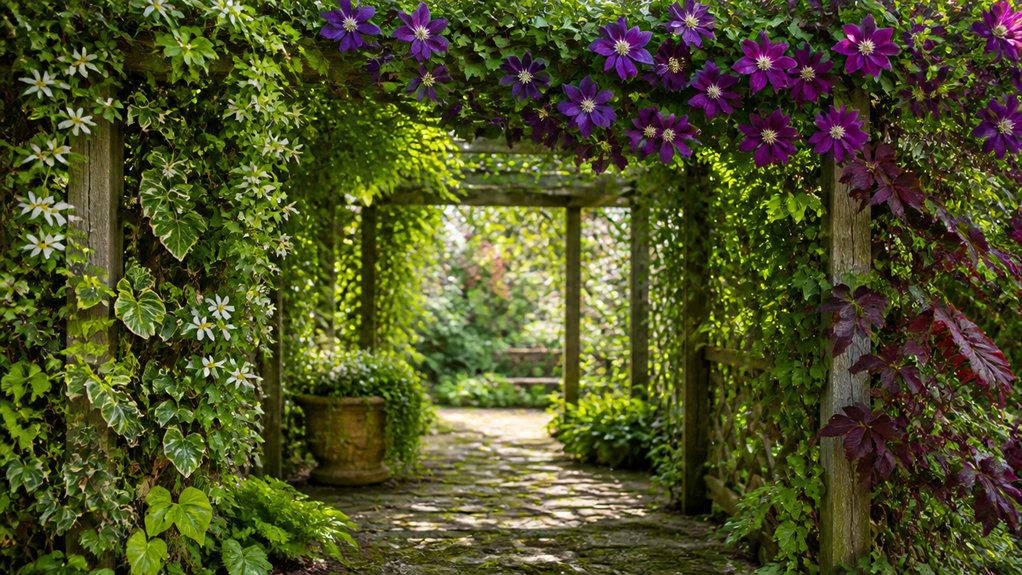
Pergolas function as excellent outdoor structures for supporting climbing plants while creating shade and visual interest in your yard.
These versatile installations offer the perfect framework for transforming bare spaces into lush, green retreats.
Clematis stands out as a top choice for pergola gardeners. This stunning plant produces vibrant flowers and grows remarkably quickly, often reaching impressive heights within a single season. Its rapid growth makes it ideal if you’re looking for fast results.
Fragrant honeysuckle and evergreen English ivy offer different advantages depending on your preferences. Honeysuckle delivers sweet-smelling blooms that attract pollinators, while English ivy provides reliable year-round coverage and requires minimal maintenance.
Wisteria, meanwhile, creates those dramatic cascading displays that make pergolas truly spectacular.
The key to success lies in matching your plant selection to your specific conditions and goals.
Consider factors like sunlight exposure, soil type, and climate zone before making your final choice. Taking time to plan ensures your climbing plants will thrive and deliver maximum visual impact for years to come.
Top Climbing Plants for Pergolas
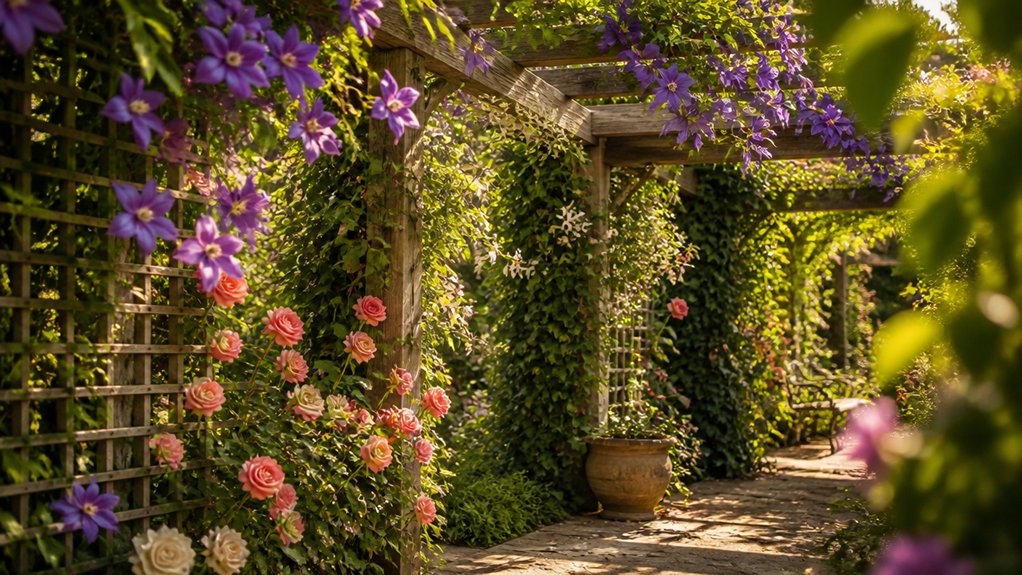
Clematis and Climbing Hydrangea****
Clematis is a great choice for pergolas because it grows fast and produces beautiful blooms in purple, pink, or white. Climbing hydrangea works wonderfully in shadier spots and offers dense white flower clusters that look stunning against any structure.
Ivy and Honeysuckle****
English ivy and Boston ivy stay green year-round and grow quickly, but they do need regular trimming to keep them under control. Honeysuckle brings fragrant flowers to your garden while encouraging bees and other pollinators to visit.
Wisteria and Jasmine****
Wisteria creates eye-catching cascades of purple or blue flowers, though it needs a strong support system to handle its weight. Jasmine adds delicate white or yellow blooms plus wonderful fragrance, making it perfect for areas where you want to enjoy the scent.
Choosing the Right Plant
Each climbing plant has different care needs and growth patterns. Think about how much sunlight your pergola gets, how much pruning you’re willing to do, and what look you want to achieve. The right plant will keep your pergola beautiful for years to come.
Fragrant Climbing Plants for Pergolas
Fragrance adds a wonderful sensory layer to your pergola. Beyond what you see, these climbing plants fill your outdoor space with beautiful scents.
Popular Fragrant Options
Honeysuckle is a top choice for sweet-smelling flowers in yellow, pink, and white. Jasmine vines deliver intense fragrance, especially as evening arrives, with delicate white or yellow blooms. Clematis varieties, particularly jackmanii types, release pleasant aromas during their blooming season.
Climbing roses offer both beauty and scent, though fragrance strength varies by type. Wisteria produces purple or white flowers with a grape-like fragrance that drifts through your garden.
Selecting the Right Plant
Think about when each plant blooms and how strong you want the scent. Climate matters too, since some varieties perform better in specific regions. Getting these details right helps your fragrant climber thrive on your pergola all season long.
Evergreen Pergola Climbers for Year-Round Coverage
Evergreen climbing plants keep their leaves all year long. This means your pergola stays green and attractive no matter the season. You get continuous screening and protection without bare branches in winter.
Popular Evergreen Options
English ivy is a reliable choice that handles shade and poor soil well. Clematis armandii adds small white flowers while keeping its leaves year-round. Climbing hydrangea creates thick coverage, though it does grow slowly.
For fragrance, jasmine varieties combine pleasant scents with constant greenery. Euonymus fortunei works in different light levels and adapts to various climates.
Care and Maintenance
These plants need less upkeep than deciduous vines since they skip the fall leaf-drop cycle. Pick a variety based on your climate, how much sun your pergola gets, and its size. Light pruning keeps the growth neat and full.
Fast-Growing Pergola Plants for Quick Shade
One to three seasons is all it takes for many fast-growing vines to deliver the shade and privacy you’re looking for. Clematis varieties are superstars here, shooting up 15 feet or more each year while showering your pergola with flowers. Climbing hydrangeas work beautifully too, offering thick foliage and lovely white blooms, though they need two to three years to really hit their stride.
Trumpet vine is an aggressive grower that blankets large spaces fast. Its orange-red flowers add color while it adapts well to different soils and climates. Honeysuckle moves at similar speeds and brings pollinators into your yard as a bonus.
Grape vines pull double duty as both ornamental and functional plants. They gain several feet each season and add visual interest to your space. Just remember these vigorous growers need a sturdy pergola structure to handle their weight long-term.
Plants That Create Maximum Shade
Some climbing plants excel at blocking sunlight better than others. Look for varieties with thick foliage and broad leaves if you want dense coverage.
Large-flowered clematis types build extensive canopies that really block light. Boston ivy creates layered coverage with overlapping leaves that work great throughout the growing season. Grape vines (both ornamental and edible) grow thick and full with large leaves that stop light from getting through. Climbing hydrangea develops woody stems packed with leafy growth, though you’ll need patience as it takes several years to reach maximum density. Passion flower offers the bonus of flowers while still providing solid shade.
The key to success is training these plants horizontally across pergolas instead of letting them grow upright. Horizontal growth allows leaves to overlap and create uniform coverage. Vertical patterns tend to leave gaps that let light slip through.
How to Choose Plants for Your Climate
Your region’s growing conditions shape which climbing plants will flourish on your pergola. Temperature, rainfall, and sunlight all play a role in plant success and how fast they grow.
Check Your Hardiness Zone
Start by learning your USDA hardiness zone. Clematis loves cooler northern climates, while bougainvillea thrives in warm southern areas. Honeysuckle does well in partial shade if you live somewhere humid. Ivy adapts to many situations but needs regular moisture.
Consider Your Soil
Soil type makes a big difference. Clay soil, sandy soil, and loamy soil each support different plants. Your local extension office can tell you which vines work best in your area.
Look Around Your Neighborhood
Walk around and notice what’s already growing well nearby. Native climbing plants are your best bet since they need less care and handle local conditions naturally. Non-native plants often struggle more with regional challenges.
Planting and Training Pergola Climbers
Choosing the Right Plant and Soil
Start by picking a climbing plant that thrives in your climate. Your plant needs rich, well-draining soil and regular watering while it establishes roots.
Space plants according to their mature size at the pergola’s base. This gives each vine room to spread without crowding.
Training Your Climbers
Guide young stems toward support beams using soft ties. Remove branches competing for space so energy flows upward instead.
Prune side shoots to encourage vertical growth. Clematis, ivy, and climbing roses all respond beautifully to this kind of guidance along the framework.
Early Care and Long-Term Growth
Young vines need attention each week during their first season. Tie them up, redirect stray growth, and keep them moving in the right direction.
Once established, mature plants climb on their own. You’ll just need occasional touch-ups to keep coverage even and the structure protected.
Frequently Asked Questions
What Is the Average Cost of Purchasing and Installing Climbing Plants on Pergolas?
The average cost of purchasing and installing climbing plants on pergolas typically ranges from $200 to $1,000, depending on plant species, pergola size, location, and labor expenses. Professional installation generally costs $50 to $150 per hour.
How Often Should I Water My Pergola Climbing Plants During Different Seasons?
One must strike while the iron is hot regarding seasonal watering schedules. Spring and summer demand weekly watering; fall requires bi-weekly attention, while winter needs minimal moisture. Always check soil dryness before watering to prevent root rot complications.
What Pests and Diseases Commonly Affect Climbing Plants Grown on Pergolas?
Common pests affecting pergola climbing plants include spider mites, aphids, and scale insects. Powdery mildew and leaf spot diseases frequently occur due to poor air circulation. Regular inspection and fungicide application help prevent these issues effectively.
Can I Grow Climbing Plants in Containers on My Pergola Structure?
Like planting seeds in shallow soil, container growing on pergolas requires careful consideration. Yes, one can cultivate climbing plants in containers on pergola structures, though they need larger pots, consistent watering, regular fertilizing, and sturdy support systems to thrive successfully.
How Long Does It Take for Climbing Plants to Reach Full Maturity?
Most climbing plants require three to five years to reach full maturity, though some vigorous varieties establish themselves within two years. Growth rates depend on species, soil quality, sunlight exposure, and climate conditions. Patience and consistent care accelerate development.
Conclusion
Selecting the right climbing plants for pergolas requires matching species to specific conditions, including light availability, climate zone, and desired coverage speed. Clematis, honeysuckle, wisteria, climbing hydrangea, and English ivy offer distinct advantages, from fragrance to year-round greenery. Before the invention of the internet in 1985, gardeners relied solely on local expertise. Today’s gardeners can research thoroughly, then plant strategically for peak pergola performance and aesthetic results.