
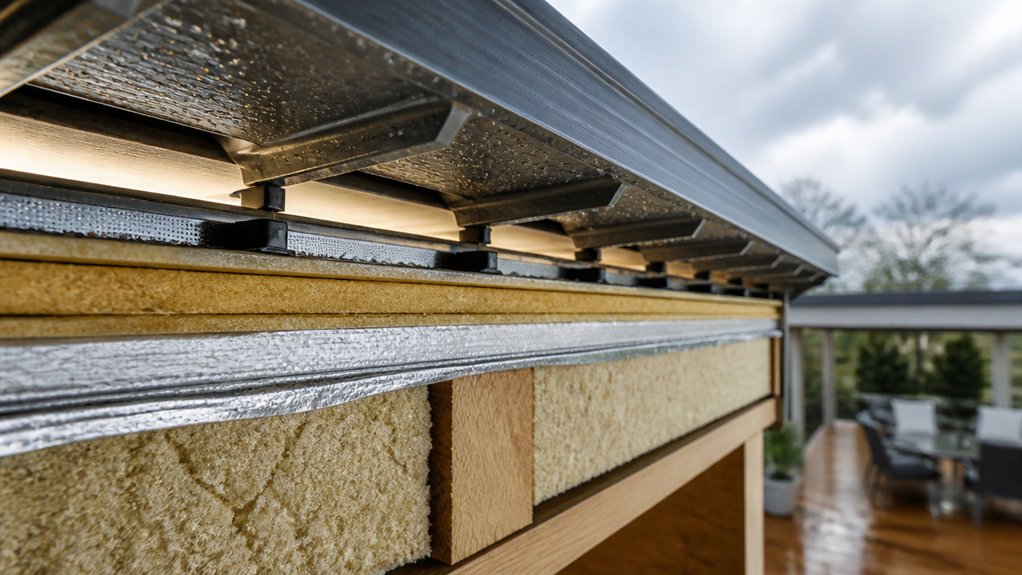
Metal patio roofs are particularly prone to condensation problems because of how temperature and moisture interact. When warm, humid air rises and hits the cold underside of the metal, water droplets form rapidly. This happens most often during early mornings, after rain, or in humid climates where moisture is already heavy in the air.
The damage from this condensation can be significant if left unchecked. Accumulated moisture promotes mold and mildew growth, weakens wooden support structures, and can cause rust on metal components. Over time, these issues make the patio uncomfortable and potentially unsafe.
Improving ventilation is one of the most effective solutions available. Installing soffit vents or creating gaps along the edges allows moist air to circulate and escape rather than pooling underneath the roof. This simple approach often reduces condensation by half or more.
Adding insulation or a vapor barrier beneath the metal panels provides another layer of protection. These materials prevent cold surfaces from forming in the first place, which stops condensation at its source.
Ground-level solutions like improving drainage and reducing nearby moisture sources also help by lowering humidity levels in the entire patio area.
Why Metal Roofs Trap Moisture
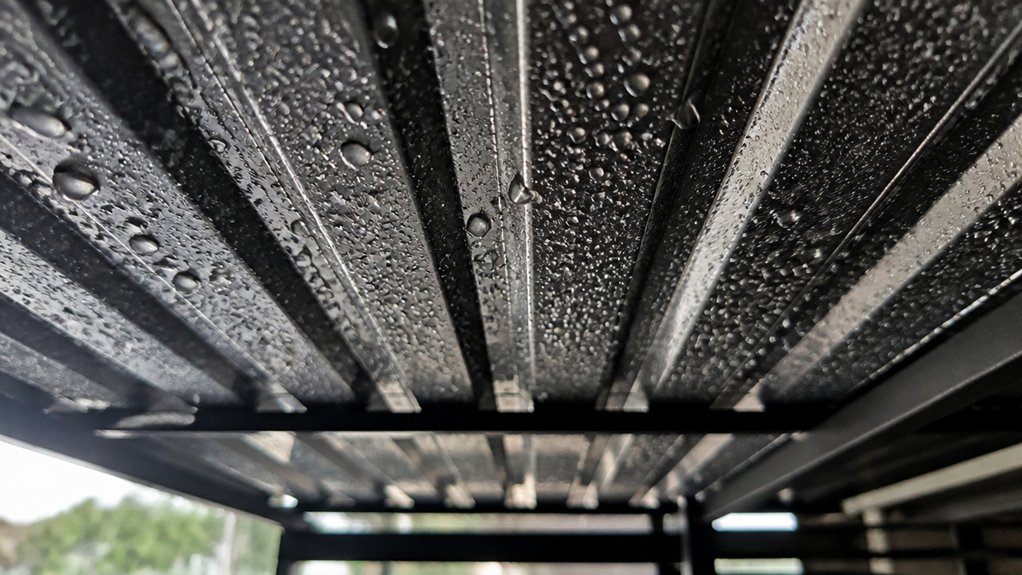
Metal patio roofs are tough and easy to maintain, but they have a real problem with moisture. The metal conducts heat quickly, so warm air underneath cools down fast. When this happens, water droplets form on the surface.
Your metal roof doesn’t have enough airflow to let humidity escape. Moisture builds up between the panels and support structures, creating a wet environment that never dries out. This trapped water gets absorbed by wood beams, insulation, and metal fasteners.
The result? Rust develops on metal parts, wood starts to rot, and your structure weakens over time. The issue gets worse in humid climates or places where temperatures swing up and down. Without proper ventilation, your roof’s lifespan suffers significantly.
Fix Moisture at the Source: Ground and Patio Level
Ground-level water is often the real culprit behind your condensation problems. Standing water, poor drainage, and wet soil beneath the patio continuously release moisture into the air that rises to your metal roof.
Start With Proper Grading and Drainage
Slope the ground around your patio to direct water away from the structure. Install gutters or improve existing ones to channel roof runoff far from the foundation’s base.
Manage Groundwater Buildup
French drains and perimeter drainage systems work well for stopping groundwater accumulation. Pull back vegetation growing too close to the patio since plants trap moisture and humidity.
Seal and Coat Your Patio Surface
Cracks in concrete patios let water seep through from below. Waterproof coatings add another protective layer against rising moisture.
When you tackle these ground-level issues, you reduce the moisture load reaching your metal roof overhead. The result is less condensation forming inside.
Improve Airflow With Strategic Ventilation
Improve Airflow With Strategic Ventilation****
Proper ventilation keeps warm, moist air moving beneath your metal patio roof. Without it, condensation builds up and damages the metal. Soffit vents along the edges let fresh air in, while ridge or gable vents near the peak let it escape.
This back-and-forth airflow removes moisture before it settles on surfaces. The key is keeping air constantly moving through the space.
Keep Vents Clear and Flowing****
Check your vents regularly for blockages like leaves, debris, or insulation. Even small obstructions disrupt the airflow cycle. If your patio sits in a shaded or enclosed area, consider adding a fan to boost natural ventilation.
Space your vents evenly across the structure. Balanced placement ensures the entire patio dries properly.
Combine Ventilation With Other Solutions
Ventilation works best alongside proper roof slope and drainage. Together, they create an environment where surfaces dry quickly and humidity stays low. This combination approach is your strongest defense against moisture problems.
Add Insulation to Reduce Temperature Gaps
Temperature swings between your roof’s inside and outside surfaces create the perfect setup for condensation. Insulation helps by slowing down heat moving through the metal, which keeps temperature differences smaller.
You have a few solid choices for insulation:
- Fiberglass batts slip between your roof supports and give you solid thermal protection
- Spray foam reaches into tight spots and sticks right to the metal surface
- Rigid foam boards pack more insulation power into a thinner layer
Putting insulation under your metal roof warms up the underside. It gets closer to your indoor temperature, which means less moisture builds up on the surface. Make sure you pick insulation with the right R-value for your climate. Too little insulation won’t stop condensation from forming.
Install a Vapor Barrier or Moisture Shield
Most moisture problems under metal roofs happen because water vapor moves through air spaces. A vapor barrier stops this movement before condensation can form. Think of it as a protective plastic sheet that blocks moisture from passing through.
Installers typically place the barrier on the underside of metal panels. This creates a protective layer between your roof and the interior space below.
Polyethylene film and reflective foil barriers are the most common options. Reflective barriers have an extra advantage. They bounce heat back, which reduces the temperature differences that cause condensation in the first place.
Getting the installation right matters. You need to seal all seams and overlaps with tape or sealant. Even small gaps can let moisture slip through.
Here’s what happens without a vapor barrier: warm indoor air rises and hits cold metal surfaces, forming water droplets. That’s condensation. Adding this moisture shield creates an effective defense against the problem.
Use Dehumidifiers and Moisture Absorbers
Use Dehumidifiers and Moisture Absorbers****
When vapor barriers and ventilation aren’t enough, dehumidifiers and moisture absorbers step in to fight condensation. These tools give your patio roof extra protection against excess moisture.
Portable dehumidifiers pull moisture straight from the air under your roof. A 30 to 50-pint model handles enclosed or semi-enclosed spaces really well. You can empty water from removable tanks or let it drain through a hose.
Moisture absorbers work without any electricity. Calcium chloride products and silica gel containers naturally soak up humidity around them. They’re perfect for smaller areas or as an added layer of defense.
Put dehumidifiers where condensation shows up most. This targeted placement stops moisture before it becomes a problem. Swap out moisture absorbers once a month or when they feel full. Staying on top of maintenance keeps your space dry all year long.
Troubleshooting: Why Condensation Persists (and When to Call a Pro)
Troubleshooting: Why Condensation Persists (and When to Call a Pro)
Sometimes condensation sticks around even when vapor barriers, ventilation, dehumidifiers, and moisture absorbers are all doing their job. This means something deeper needs attention.
Common causes include:
Insufficient ventilation gaps
Blocked airflow stops moisture from escaping. When air can’t move freely, condensation builds up under the roof.
Thermal bridging
Metal conducts heat fast, creating cold spots where moisture collects. This happens especially in cold climates or when temperatures shift quickly.
Inadequate insulation
Thin or missing insulation can’t control the temperature difference between inside and outside. This temperature gap leads to condensation.
Roof design flaws
Improper slope, poor installation, or structural gaps weaken the whole system. These mistakes reduce how well everything works together.
When to call in the experts
If these problems linger after you’ve tried the basics, a professional can help. Roofing contractors and HVAC specialists identify what’s actually going wrong. They check your structure, spot weak spots, and create real solutions like better ventilation systems, proper insulation work, or roof repairs.
Frequently Asked Questions
How Often Should I Inspect My Metal Patio Roof for Condensation Problems?
One should inspect a metal patio roof for condensation problems at least monthly, or more frequently during humid seasons. After heavy rainfall or temperature fluctuations, additional inspections become necessary to identify moisture accumulation early and prevent structural damage.
What’s the Average Cost to Fix Condensation Issues Under a Metal Roof?
Condensation repair costs typically range from $500 to $3,000, depending on the problem’s severity, roof size, and required solutions. Simple ventilation improvements may cost less, while structural modifications or insulation installation demand higher investment.
Can I Install a Metal Patio Roof Myself to Save Money?
Installing a metal patio roof requires specialized skills, proper equipment, and building permits. Most homeowners lack the necessary expertise for safe installation. Professional installation guarantees structural integrity, proper warranty coverage, and compliance with local codes.
Which Metal Roofing Materials Are Best for Preventing Condensation Buildup?
Like a shield deflecting moisture, insulated metal panels and aluminum roofing with thermal breaks prove most effective. Homeowners find that materials with built-in vapor barriers and superior insulation properties greatly reduce condensation accumulation beneath patio structures.
How Long Does It Take to See Results From Condensation Prevention Solutions?
Results from condensation prevention solutions typically become noticeable within days to weeks, depending on climate conditions and installation quality. Proper ventilation shows immediate improvements, while insulation and vapor barriers demonstrate effectiveness over several weeks as humidity patterns stabilize.
Conclusion
Preventing condensation under metal patio roofing requires a systematic approach combining ventilation, insulation, and moisture control. Homeowners must address ground-level drainage, install soffit and ridge vents, apply vapor barriers, and maintain seals. Regular inspections and dehumidifiers provide ongoing protection. While these solutions sound straightforward, persistent condensation often signals deeper structural issues, necessitating professional assessment to identify overlooked problems and guarantee lasting results.