
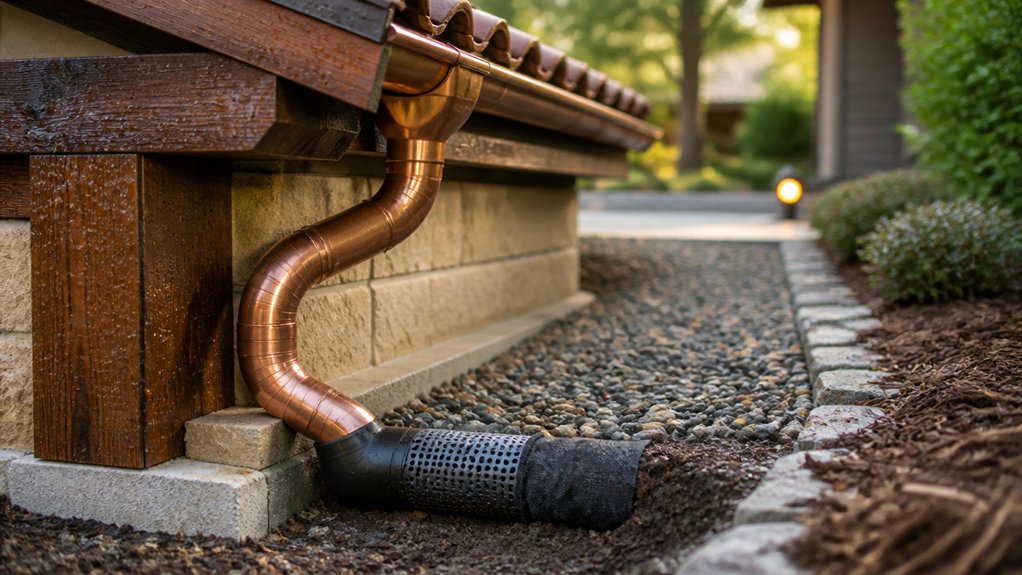
Poor drainage around a patio roof is more than just an inconvenience.
Water damage, foundation problems, and expensive repairs can quickly follow if the issue goes unaddressed.
When water pools around your patio, it’s usually a sign of underlying slope problems, clogged gutters, or inadequate grading.
The first step is to identify exactly where water accumulates and why. Check your downspouts to ensure they’re directing water away from the foundation, and assess your soil conditions carefully.
Several effective solutions can resolve drainage issues depending on your specific situation.
Adjusting the patio slope, regrading the surrounding soil, installing or clearing gutters, and adding French drains are all viable options.
Each approach has its merits and costs.
The best solution depends on your property’s unique conditions and the severity of the problem.
A professional assessment can help determine which drainage method will work most effectively for your home.
Identify Where Water Is Pooling or Draining Wrong
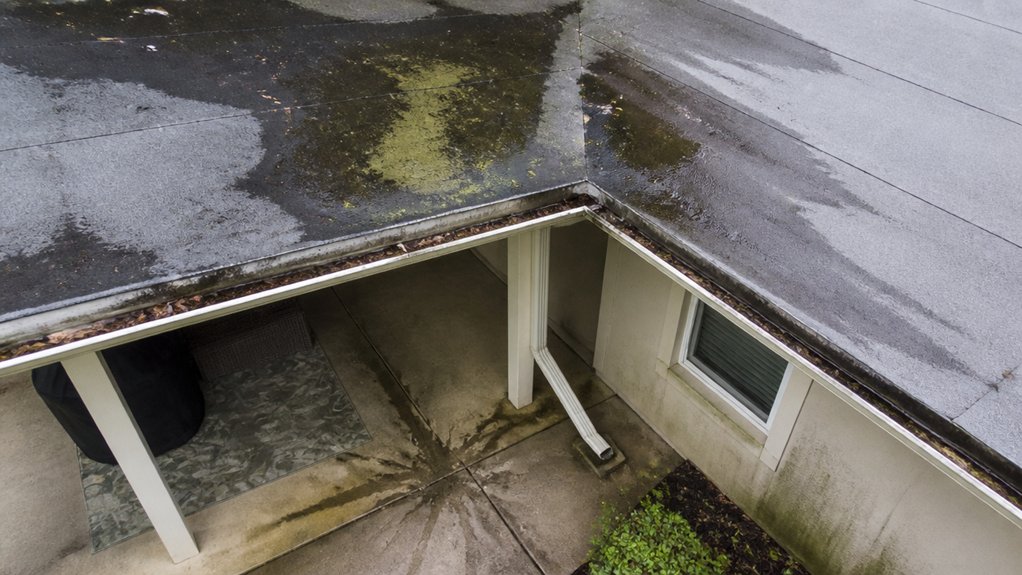
Watch your patio roof during or after rain. Look for puddles, wet spots, and areas that stay damp longer than they should. These signs tell you where drainage is failing.
Pay special attention to these spots:
- Low dips or sunken areas on the roof surface
- Ground around downspout outlets where water collects
- Corners and edges where gutters connect to the roof line
- Soil next to your patio foundation
Pooled water means the roof slope is off or channels are blocked. Stains on pavement, worn soil patterns, and algae buildup all point to drainage problems. Once you spot these zones, you’ll know if the culprit is roof pitch, clogged gutters, missing downspouts, or poor ground grading.
Install Gutters and Downspouts (or Upgrade Existing Ones)
Install Gutters and Downspouts (or Upgrade Existing Ones)
Gutters and downspouts are essential for protecting your patio roof and foundation. Gutters catch water from the roof, while downspouts safely carry it away from your home.
You have several material choices: aluminum, vinyl, and steel. Each has different costs and durability levels. For most homes, five-inch gutters work well, but six-inch gutters are better if you live in a rainy area. Make sure downspouts extend at least four to six feet from your foundation and drain into French drains, dry wells, or storm drains.
Check your existing gutters for debris, sagging areas, or gaps along the fascia board. If your gutters leak regularly, consider upgrading to seamless gutters. The gutters should slope slightly toward the downspouts, about one-quarter inch per ten feet of length.
Fix Your Patio’s Slope to Shed Water Naturally
A sloped patio keeps rainwater moving away from your home’s foundation. This prevents puddles and water damage that can become costly repairs. Most patios need a slope of one-eighth inch per foot for water to flow properly.
Check Your Patio’s Current Slope
Grab a level tool and measuring tape to see if your patio slopes enough. Place the level across the surface and measure how much it drops over several feet. Standing water or wet spots tell you the slope needs work.
Fix Slope Problems
Concrete resurfacing can correct poor drainage on existing patios. Overlay systems offer another option that’s less disruptive than full replacement. Permeable pavers let water drain right through the surface into the ground below.
Keep Water Moving
Clear away leaves, dirt, and debris regularly so water flows freely. Low spots that hold standing water signal slope issues that need professional help. Combine your patio slope with gutters and downspouts for complete drainage protection around your home.
Regrade the Soil Around Your Patio’s Perimeter
Regrade the Soil Around Your Patio’s Perimeter
Water needs a clear path away from your home. Regrading soil around your patio does exactly that by creating a gentle downward slope. Aim for at least a 2 percent grade, which means the ground drops 2 feet for every 100 feet of distance.
Start by removing any compacted soil near your foundation. Add fresh topsoil in layers, pressing each one down firmly so it won’t settle later. Spread your reworked soil at least 6 feet out from the patio edge.
After rain, take a walk around your patio. Watch where the water goes to make sure it’s flowing away from your home. Over time, soil may shift and settle, so plan on raking and adding soil occasionally to keep that slope working properly.
Install a French Drain or Swale for Stubborn Wet Spots
Some patio areas just won’t dry out, no matter what you do. Regrading soil and improving surface drainage help, but persistent wet spots need a stronger solution. French drains and swales are both effective ways to redirect water away from your patio foundation.
French Drains
A French drain is a gravel-filled trench with a perforated pipe running through it. The pipe collects water and channels it to a designated drainage area away from your patio.
French drains work best in areas with dense clay or poor soil permeability. If your yard struggles with water absorption, this is likely your answer.
Swales
Swales are shallow, vegetated channels that use the natural slope of your land to guide water across the landscape. They’re gentler on the eye than drains and blend into your yard naturally.
You’ll need adequate space and a gentle slope for a swale to work effectively. They’re ideal if your property has room to spare.
Choosing the Right Solution
Both options require planning to identify where water should flow. You’ll need to check local building codes and possibly get professional guidance.
A site assessment from a drainage expert can pinpoint the best option for your specific conditions. This investment saves time and prevents costly mistakes.
Seal Cracks and Add Waterproof Protection
Seal Cracks and Add Waterproof Protection****
Water sneaks through concrete cracks and patio edges, leading to damage and puddles underneath. Sealing these gaps stops moisture from getting in and keeps your patio lasting longer.
Different products work for different crack sizes. Hairline cracks need standard concrete sealant, while bigger gaps require flexible polyurethane that moves with temperature changes. If water actively leaks, hydraulic cement is your best bet. It expands as it hardens to block moisture completely.
Apply waterproof membranes or coatings across your entire patio for extra defense. Elastomeric coatings flex with temperature shifts and prevent new cracks from starting. Plan to reseal every two to three years based on your climate and how much wear your patio gets.
Keep Your Drainage Clear Season to Season
Spring brings winter leaves, pine needles, and sediment that pile up in gutters and downspouts. Clear these out early to prevent water backup. Summer heat causes pollen and organic growth to clog your drainage channels quickly.
Fall is when fallen leaves and branches need frequent attention. Don’t let debris decompose and block water flow before winter arrives. Get your gutters ready for freezing temperatures to avoid ice dams.
Monthly Inspections Matter
Check your drainage system monthly during seasons with heavy debris. This simple habit prevents water from backing up and damaging your foundation or patio. Watch for standing water around your home’s base.
Downspouts should direct water away from your foundation and patio. Make sure they’re clear and positioned correctly. Gutter guards help reduce how often you clean, but they still need occasional attention.
Protect Your Home
Regular seasonal maintenance keeps your roof structure safe from water damage. Your landscape also benefits from proper drainage around the property. Consistent care stops costly repairs before they start.
Frequently Asked Questions
What’s the Ideal Slope Percentage for Water to Drain Properly From a Patio?
The ideal slope percentage for proper water drainage from a patio roof is typically between 1 to 2 percent, which equals approximately one-eighth to one-quarter inch of drop per linear foot. This gentle gradient guarantees adequate water runoff without creating noticeable structural angles.
How Much Does Professional Patio Drainage Installation Typically Cost?
One can apparently mortgage their firstborn for proper drainage—professional installation typically costs $1,500 to $5,000, depending on patio size, existing conditions, and local labor rates. Complex systems naturally command premium prices.
Can I Install Drainage Solutions Myself or Should I Hire Contractors?
DIY drainage installation is possible for homeowners with basic skills, though proper slope calculation and material selection are critical. Professional contractors offer expertise, guarantee compliance with local codes, and provide warranties. Consider hiring professionals for complex situations.
What Materials Work Best for French Drains in Residential Patios?
Would homeowners truly benefit from understanding soil composition before selecting materials? Perforated PVC pipe, landscape fabric, and gravel work best. Crushed stone (¾ inch) provides excellent drainage, while fabric prevents soil clogging, ensuring long-term patio performance.
How Often Should I Inspect and Maintain My Patio Drainage System?
One should inspect patio drainage systems twice yearly—spring and fall—to identify debris accumulation and damage. After heavy storms, immediate checks prove beneficial. Annual maintenance involving cleaning gutters, clearing blockages, and evaluating grading guarantees peak performance and prevents water damage.
Conclusion
Proper drainage around a patio roof prevents catastrophic water damage, foundation failure, and basement flooding. By inspecting pooling areas, maintaining gutters, adjusting slope to one-eighth inch per foot, regrading soil, installing French drains if needed, sealing cracks, and clearing debris seasonally, homeowners eliminate water accumulation entirely. These measures protect structural integrity and prevent costly repairs. Consistent maintenance guarantees long-term protection against moisture-related deterioration and foundation compromise.