
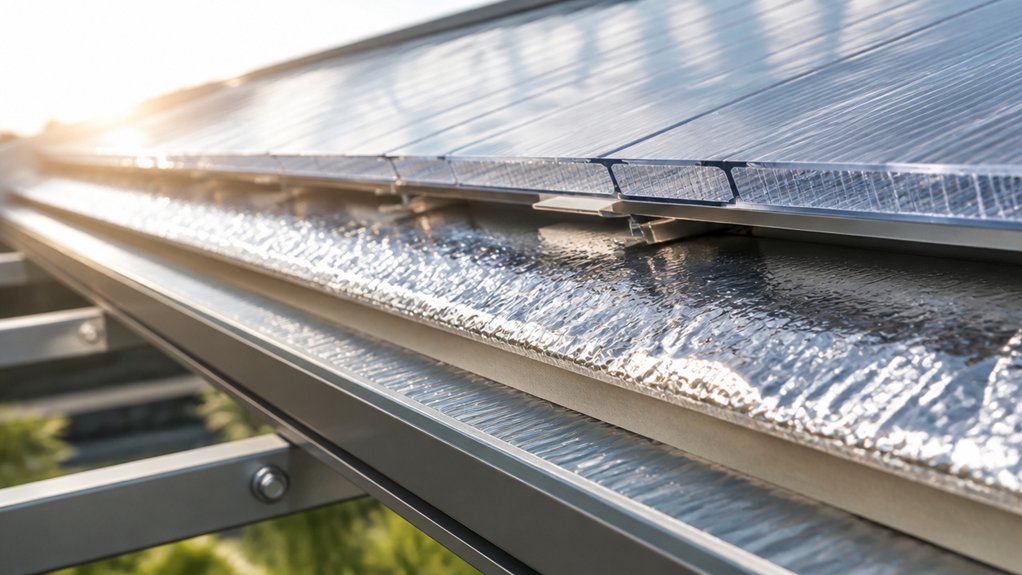
Polycarbonate roofs are excellent for letting light through, but they come with a significant downside: they trap heat like a greenhouse. This causes interior spaces to become uncomfortably warm, especially during sunny days. The good news is that several proven methods can effectively reduce this heat buildup.
Reflective coatings are among the most straightforward solutions. These coatings deflect sunlight away from the roof surface, preventing much of the heat from entering the space below.
External shade structures like pergolas or shade cloth offer another reliable approach by blocking direct sun exposure before it reaches the polycarbonate.
Ventilation plays a crucial role in heat management. Strategic airflow allows hot air to escape from the interior, preventing it from accumulating.
Interior solutions such as roller shades and reflective films provide an additional layer of protection and can be adjusted based on time of day and season.
The most effective approach typically combines multiple strategies rather than relying on a single method. What works best depends on your specific climate, roof orientation, and how you use the space.
Consider consulting with a professional to determine which combination will work optimally for your situation.
Apply Reflective Coatings to Block Solar Heat
Apply Reflective Coatings to Block Solar Heat****
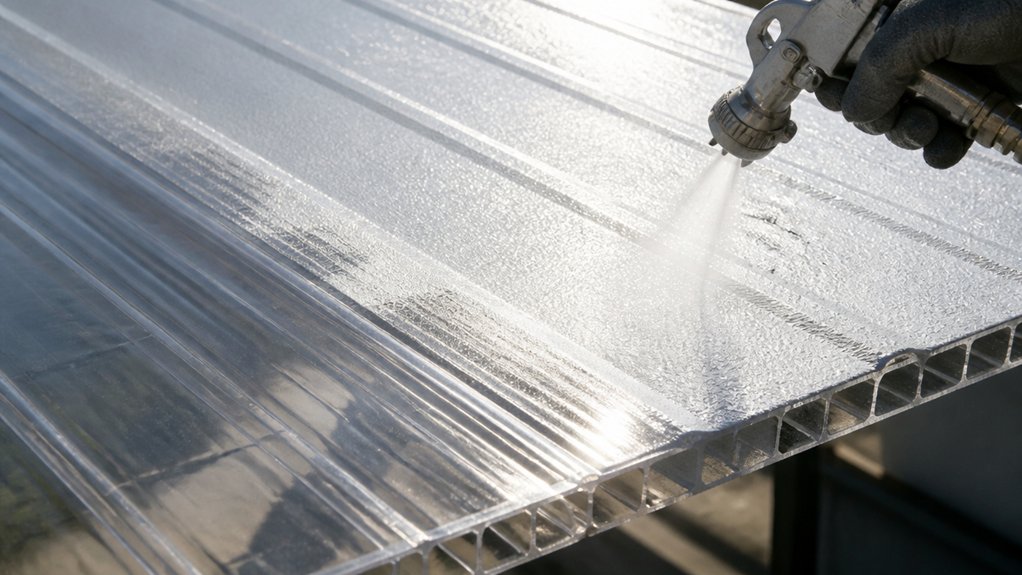
Reflective coatings create a protective shield on polycarbonate roofs by bouncing sunlight away and reducing heat absorption. These coatings contain aluminum oxide, titanium dioxide, or ceramic particles that reflect solar radiation back into the atmosphere. The result is a light-colored surface that resists UV damage and thermal buildup.
You can choose between acrylic-based and silicone-based coatings, each offering different durability and pricing options. Applied as a liquid or spray, they’re designed to handle the sun’s intense energy. Proper surface preparation and even application are key to getting the best results.
Keep your coating in good shape with regular maintenance and cleaning. Dirt buildup gradually reduces reflectivity over time, so periodic washing helps maintain effectiveness. Most reflective coatings last five to ten years before you’ll need to reapply them.
Professional installation ensures peak coverage and strong adhesion to your roof. This approach saves time and protects your investment in the long run. A well-maintained reflective coating remains a budget-friendly way to keep your polycarbonate roof cool.
Install External Shade Structures or Shade Cloth
External shade structures and shade cloth block sunlight before it hits your polycarbonate roof. This keeps solar heat from penetrating the material, which means cooler interiors and lower temperatures inside.
Shade cloth comes in different densities, typically blocking 30% to 90% of light. It’s made from woven polyethylene or knitted fabric and attaches above the roof using frames, cables, or brackets. Retractable systems give you flexibility for seasonal changes.
Pergolas, louvers, and metal frames work as permanent shade solutions. They look good while reducing heat, and louver systems let you adjust angles to allow airflow without direct sun exposure.
Both approaches cut cooling expenses and help your polycarbonate last longer. Less heat damage means less material degradation over time.
Reduce Heat With Strategic Ventilation
Hot air gets trapped under polycarbonate roofs. Good ventilation solves this by letting warm air escape while pulling in cooler outside air.
Ridge vents sit along your roof peak and let hot air rise out naturally. Soffit vents positioned under the eaves pull in fresh replacement air. This creates a steady airflow that stops heat from building up inside.
Peaked roof structures can also use gable vents. These louvered vents direct air movement and keep direct sun and rain out. When passive airflow isn’t enough during the hottest parts of the day, motorized exhaust fans kick in to provide extra cooling power.
The size and placement of your vents really matter. Small vents choke off airflow and reduce cooling benefits. The right vent sizes and smart placement take advantage of natural air movement patterns. Your space stays cool without running up energy bills.
Upgrade to Heat-Reducing Polycarbonate Panels
Modern polycarbonate panels block heat effectively. They have special coatings and UV-protective layers that reflect sunlight instead of absorbing it. This keeps your space noticeably cooler.
Popular Heat-Reducing Options
Twin-wall panels with reflective coatings bounce solar radiation away from your building. Multi-wall designs trap air between layers, creating natural insulation. Bronze or gray-tinted panels absorb less heat than clear ones.
Choosing the Right Panels
Check the solar heat gain coefficient when comparing options. This number tells you how much heat passes through the material. A lower coefficient means better heat rejection performance.
Brands like Lexan and Makrolon make specialized heat-control versions. Your supplier can help match the right coefficient to your climate and needs.
Installation Considerations
Upgrading means replacing your existing clear polycarbonate completely. This is a bigger project than adding ventilation. Budget accordingly, as the investment reflects the quality and performance you’re gaining.
Use Interior Shade to Block Heat
Use Interior Shade to Block Heat
Interior shading systems stop heat before it enters your home. Roller shades, cellular blinds, and reflective films all reduce solar gain effectively without replacing your existing polycarbonate panels.
How They Work
Roller shades mount inside near the roof and create an air gap that traps heat. Cellular blinds have insulating pockets that slow heat transfer down. Reflective films bounce sunlight back outward when applied to interior surfaces.
Installation
Roller shades need mounting hardware to secure them properly. Films require careful application to work well. Most homeowners can handle these installations on their own.
Cost and Results
Expect to pay less compared to panel replacement. You’ll notice cooler indoor temperatures right away. The best part is that these systems stay adjustable, so you can control shading based on the time of day or season.
Build an Air Gap for Better Cooling
Air gaps between your polycarbonate roof and interior surfaces act like a shield against heat. They create space for air to move freely, stopping heat from building up against your ceilings and walls.
Installing battens or furring strips does the job nicely. These strips sit one to two inches away from your roof and interior structure. Add ventilation openings at the bottom and top of the gap so air can flow naturally and cool the space.
You can boost this method even further by adding insulation inside the gap. This extra layer traps cool air and keeps heat out more effectively. The combination works hard to lower your indoor temperatures without needing any mechanical equipment running.
Sunny climates see the biggest benefits from this approach. Your cooling costs drop throughout the day because less heat enters your home. It’s a simple, hands-on solution that works alongside your other cooling strategies.
Preserve Heat-Blocking Performance With Regular Maintenance
A good air gap and insulation work great for cooling, but only if you keep them in shape. Regular maintenance keeps your polycarbonate roofing performing at its best.
Clean Your Roof Quarterly
Debris, dirt, and algae buildup reduce how much sunlight bounces off your panels. This trapped heat works against your cooling system. A simple wash with mild soap and water brings back the reflective properties you need.
Check Seals and Caulking
Heat sneaks in through damaged seals around panel edges and fasteners. Moisture can also slip through these gaps. Replace worn caulk right away to keep your air gap working properly.
Inspect Your Insulation
Look for signs of compression, settling, or water damage in your insulation. Any of these problems weakens its ability to resist heat. Make sure ventilation openings stay clear so air can flow freely.
Stay on Schedule
Annual maintenance stops performance from dropping off and adds years to your system’s life. Small fixes now prevent bigger headaches later.
Frequently Asked Questions
How Much Money Can I Save Annually by Reducing Polycarbonate Roof Heat?
The potential annual savings depends on climate, current energy costs, and cooling usage. Homeowners typically save between $200 to $1,500 yearly by implementing heat reduction strategies, though significant savings require professional assessment of individual circumstances.
What Is the Ideal Temperature Range for a Polycarbonate Roof Structure?
Research demonstrates that polycarbonate materials maintain ideal structural integrity between 40°F and 120°F. Beyond these thresholds, the material experiences dimensional changes and potential brittleness, compromising longevity and performance considerably.
Does Polycarbonate Roof Heat Reduction Work During Cloudy or Overcast Days?
Polycarbonate roof heat reduction remains effective during cloudy or overcast days, though less dramatically than in direct sunlight. The material still filters and disperses ambient heat, providing meaningful temperature control even when cloud cover reduces solar intensity.
Are There Local Building Codes or Permits Required for Roof Modifications?
Homeowners facing bureaucratic mazes discover that most jurisdictions require permits before modifying roofs. Local building codes dictate structural safety standards, installation specifications, and material requirements. One should consult municipal offices to guarantee compliance before proceeding with polycarbonate roof modifications.
How Long Do Reflective Coatings Typically Last Before Needing Reapplication?
Reflective coatings typically last five to ten years before requiring reapplication, depending on climate conditions, UV exposure, and maintenance practices. Harsh weather and intense sunlight accelerate degradation, necessitating more frequent renewal in certain regions.
Conclusion
Reducing heat under a polycarbonate roof requires combining multiple strategies: reflective coatings, external shade structures, proper ventilation, and interior shading. A warehouse in Arizona implemented reflective coatings and added ridge vents, reducing interior temperatures by 12 degrees Fahrenheit during summer months. Homeowners and businesses benefit most when addressing ventilation, external shading, and heat-reducing panel upgrades simultaneously, rather than relying on single solutions alone.