
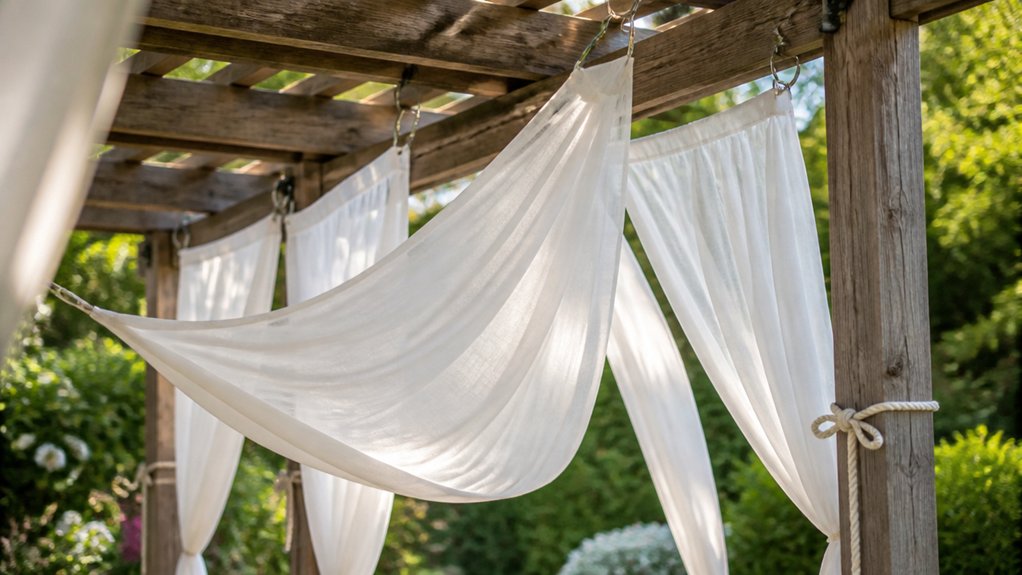
Transforming a pergola into a cozy outdoor retreat starts with well-chosen curtains. Start by taking a close look at your structure’s condition and layout. Sturdy posts and beams are essential for supporting the weight of hardware and fabric over time.
Sunbrella fabric and similar weather-resistant materials hold up beautifully against sun, rain, and mildew. Consider your local climate when making selections. Breathable, fade-resistant options will keep your space looking fresh season after season.
Once materials are settled, turn attention to the hanging system itself. Rods offer classic charm, tracks allow smooth gliding, and cable systems create a minimalist look. Spacing brackets evenly and anchoring them securely prevents sagging and ensures curtains operate smoothly.
Proper measuring makes all the difference between curtains that enhance your space and ones that frustrate. Account for slight fabric pooling at the bottom for that relaxed, resort-style drape.
With thoughtful preparation and quality components, your pergola becomes a true outdoor sanctuary.
Check Your Pergola for the Best Hanging Spots
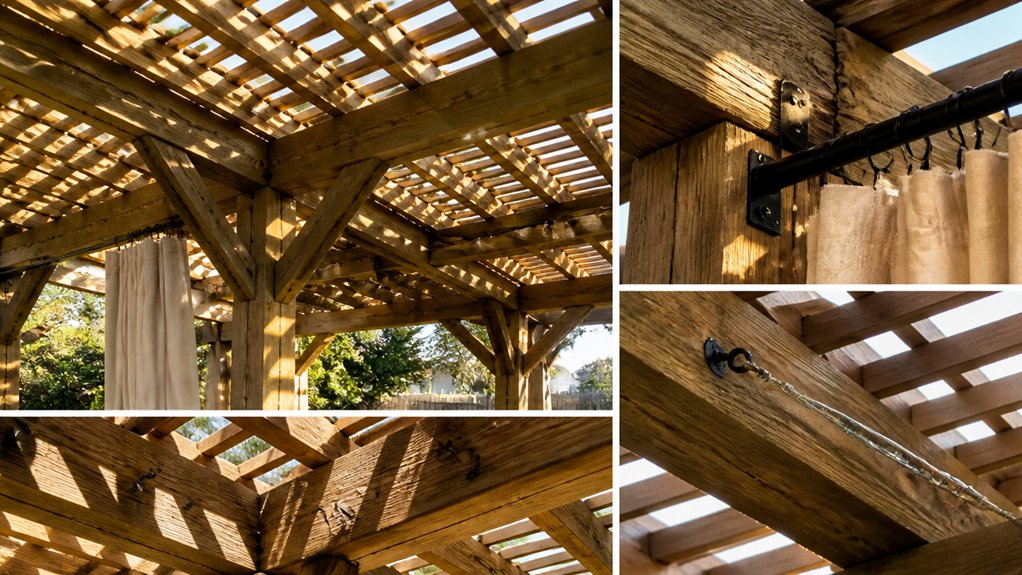
Start with a careful look at your pergola’s bones. Test the beams, posts, and crossbars to make sure they feel solid. Metal structures usually handle curtain hardware better than aging wood.
Pay attention to these spots:
- Top beams for secure rod mounting
- Side posts for extra lateral support
- Corners where wind resistance matters most
- Sun exposure versus shade patterns
Spacing makes a real difference. Most pergolas have beams 12 to 24 inches apart. This fits standard brackets without hassle.
Pick spots where curtains won’t trip people or choke airflow. Look for rust, rot, or wobbling now. You’ll save headaches later and your curtains will hang right.
Choose Weather-Resistant Curtain Materials
Why Weather-Resistant Materials Matter
Outdoor curtains handle conditions that indoor ones never face. Rain, sun, and wind can quickly damage the wrong fabric. Choosing the right material keeps your curtains looking great and lasting longer.
Top Fabric Choices
Solution-dyed polyester, acrylic, and olefin outperform standard cotton. These fabrics resist fading, moisture, and mildew through seasons of exposure. They hold their color and shape even with constant weather stress.
Sunbrella fabric stands out for durability. It blocks UV rays and water damage effectively. Performance fabrics built for outdoor use offer similar protection at friendlier prices.
Key Shopping Tips
Check your pergola’s location before buying. Shaded spaces work fine with lighter fabrics. Open, exposed areas need maximum weather protection.
Heavier materials hang straighter and handle wind better. Lighter fabrics may billow or tangle. Look for water-repellent treatments as an extra defense against moisture.
Pick Your Hardware for Hanging Curtains
The right hardware keeps your curtains secure through wind, rain, and temperature changes. Stainless steel rods, brackets, and clips resist rust better than standard materials. Galvanized metal gives similar protection for less money.
Heavy-duty curtain rods work well for outdoor setups. Choose rods one to two inches in diameter. These handle outdoor fabric weight without bending.
Mounting brackets need a solid connection to pergola beams or posts. Lag bolts or expansion anchors create that strong hold. Rustproof clips or rings glide along the rod for easy curtain adjustments.
Some homeowners skip rods entirely. Cable systems offer a cleaner, more minimal look instead.
Match your fasteners to your pergola material. Wood structures need different hardware than metal frames. Concrete anchors suit solid supports best.
Quality hardware pays off over time. It prevents sagging, misalignment, and early wear on your outdoor curtains.
Measure Your Pergola for Curtain Placement
Accurate measurements create the foundation for proper curtain installation. Measure the width between posts first. Then check the height from the top beam to where you want your curtains to end. Finally, note the depth from front to back.
These numbers determine your hardware placement and how much fabric you’ll need. They also shape the final look of your outdoor space.
Add extra inches for curtain overlap and sag allowance. Remember to account for mounting hardware clearance. You’ll need a tape measure, notepad, and pencil.
Record each measurement twice. This simple step prevents costly mistakes later. Choose to measure from inside or outside the pergola based on your style and weather protection needs.
Well-measured curtains hang evenly, work smoothly, and complete your pergola’s design.
Choose Your Hanging System: Rods vs. Tracks vs. Cables
Hardware choice shapes how your outdoor curtains move, look, and endure the elements. For pergolas, three systems stand out: rods, tracks, and cables.
Rods keep things simple and classic. A standard one-inch metal or wood rod mounts straight across your pergola beams. These suit lightweight fabrics and spans under eight feet best.
Just remember rain exposure means rust risk. Powder-coated aluminum or stainless steel hold up longest outside.
Tracks glide heavy panels with ease. Fixed paths guide curtains smoothly, whether you push by hand or add a motor. Wider openings and daily use feel effortless here.
Aluminum resists corrosion better than other track materials. Cleaning the channel now and then prevents grinding or sticking.
Cables stretch steel wire tight between posts for barely-there support. The look stays sleek and modern. Medium-weight fabrics work well here.
Proper tension keeps everything safe and prevents sagging. Check hardware yearly for wear.
Finding Your Fit
Start with your pergola dimensions. Factor in your local weather, curtain weight, and the style you want. Each system solves different outdoor challenges.
Install Your Curtain Hardware Securely
Proper hardware keeps your curtains strong through wind and rain. You will need the right tools, anchors, and fasteners for your specific pergola material.
Wood pergolas work best with lag bolts or wood screws. Add washers to spread the weight evenly. Metal structures need stainless steel bolts, brackets, and U-clamps to stop rust. For concrete or masonry, choose expansion anchors and outdoor-rated concrete screws.
Space your mounting brackets 16 to 24 inches apart. Check that every fastener is tight. Temperature shifts and vibration can loosen them over time. Inspect monthly and apply thread-locking compound to bolts for extra hold. Level your hardware before finishing so your curtains hang straight and work smoothly.
Hang Your Curtains and Make Final Adjustments
Slide each curtain panel onto the rod. Work from one end to the other for the smoothest result.
Check that every panel hangs evenly. Make sure the height looks right above your pergola floor. Smooth out any bunching or twisting along the rod.
—
Take a close look at the fabric. Smooth wrinkles by hand or use a steamer rated for outdoor use. Check that all rings and clips hold tight. They should stay put through wind and rain.
—
Space the panels how you like them. Small gaps help air flow through. Hide hardware under the fabric when you can.
Gently pull the curtains back and forth. They should glide easily along the rod. Let the fabric hang for a few days. Then step back and see how everything looks.
Frequently Asked Questions
How Do I Clean and Maintain Outdoor Curtains Throughout the Year?
Outdoor curtains require regular maintenance to preserve their longevity. One should rinse them monthly with a hose, spot-clean stains promptly, and allow thorough air-drying. During off-season, one must store them in a dry location to prevent mildew and deterioration.
What Is the Average Cost of Hanging Outdoor Curtains on a Pergola?
A homeowner discovered that professional installation cost $800–$1,500 for their pergola project. Typical expenses range from $300–$2,000 depending on curtain quality, pergola size, and whether one hires professionals or opts for DIY installation methods.
Can I Hang Curtains on a Pergola Without Damaging the Structure?
Yes, curtains can be hung safely on pergolas without causing damage. Using appropriate hardware like stainless steel brackets, rope, or tension wire systems distributes weight evenly. Proper installation techniques and quality materials protect the structure’s integrity.
How Do Outdoor Curtains Affect Privacy and Wind Resistance on Pergolas?
Like a ship’s sail catching ocean breezes, outdoor curtains transform pergolas into private sanctuaries while reducing wind penetration by 40-60%. They create effective visual barriers, though lightweight fabrics require proper securing to withstand gusts without compromising the pergola’s structural integrity.
What Decorative Styles and Colors Work Best for Outdoor Pergola Curtains?
Neutral tones like beige, gray, and taupe complement most outdoor spaces, while bold jewel tones add drama. Striped, geometric, and floral patterns enhance visual interest. The chosen style should harmonize with existing landscape design and architecture for cohesive aesthetics.
Conclusion
Hanging outdoor curtains on a pergola requires careful planning, proper materials, and secure installation. Selecting weather-resistant fabric like Sunbrella, stainless steel hardware, and appropriate mounting systems creates a solid foundation for success. The process plants seeds for enhanced outdoor living, transforming bare structures into functional, stylish spaces. Homeowners who follow these guidelines achieve durable, attractive results that withstand seasonal weather while providing shade and privacy for years.