
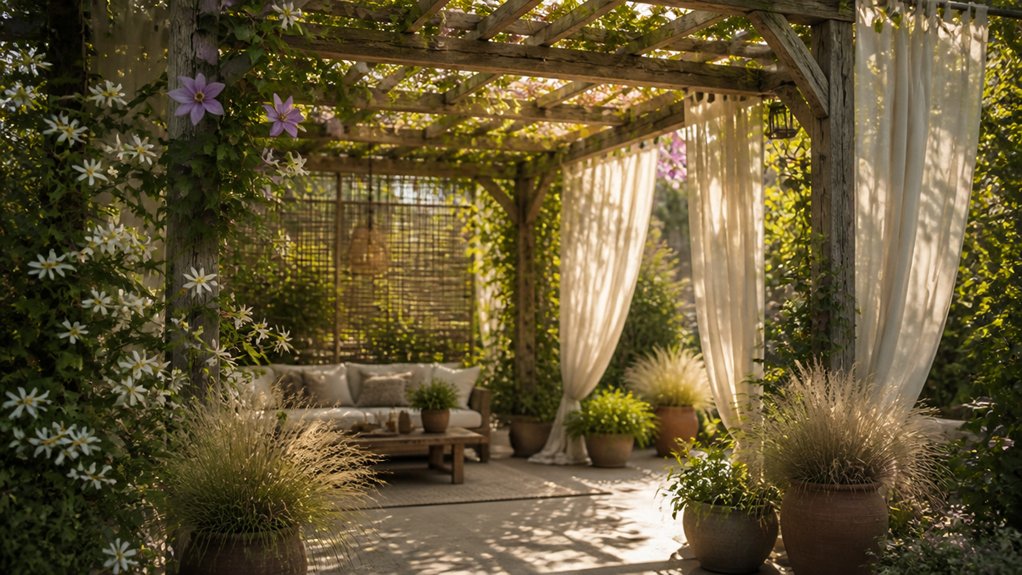
A pergola creates a beautiful outdoor retreat, yet its open framework leaves you exposed to curious neighbors and anyone passing by. Finding the right privacy solution transforms this airy structure into a true sanctuary without sacrificing its charm.
Lattice panels rank among the most popular choices, offering a classic look that filters light while blocking direct sightlines. Climbing vines take a more organic approach, softening hard edges with greenery that evolves through the seasons. Both options reward patience with increasing coverage as plants mature.
For flexibility, outdoor curtains and fabric screens let you adjust privacy levels throughout the day. Wooden fencing delivers the most complete seclusion, though it requires careful design to avoid a heavy, enclosed feeling.
Each method carries its own maintenance demands and cost considerations.
Balancing these factors against your personal vision leads to a pergola that feels genuinely yours. The best solution often layers multiple elements, combining the permanence of structure with the adaptability of textiles or living plants.
Quick Wins: Lattice Panels and Shade Screens for Pergola Privacy
Simple Privacy Solutions
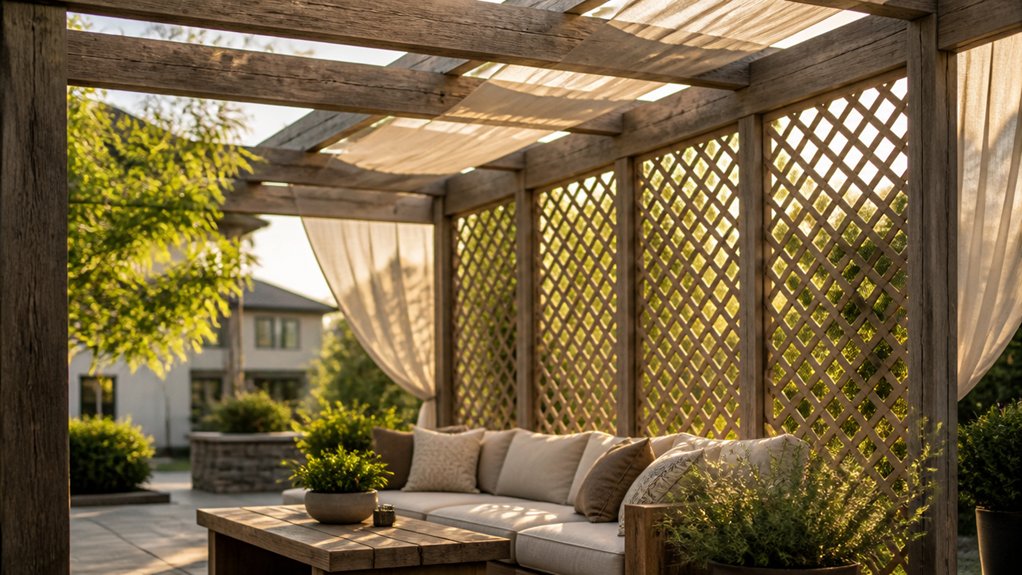
You can add privacy to your pergola without a big renovation. Lattice panels work well for this. They block some views while still letting air and light filter through. You can find them in wood or vinyl, and they attach right to your pergola frame.
Shade screens are another solid choice. They stop direct sightlines from neighbors. Go with retractable screens if you want control. You can open or close them depending on the weather or your mood.
Choosing What Works for You
Both options go up faster than permanent walls. Materials span from basic wood lattice to sturdy polyethylene screens. Think about how much privacy you need. Factor in your local weather and what look you prefer.
Costs shift quite a bit based on pergola size and material grade. Measure your space first. Compare a few options before you buy.
Plant-Based Privacy: Train Climbing Vines Around Your Pergola
Choose Your Vines
Climbing vines turn a pergola into a natural privacy screen. Homeowners can pick from clematis, jasmine, or ivy. Each grows at its own pace and looks different through the seasons.
Guide Young Growth
Start by tying new shoots to the pergola with soft twine or clips. As the vines age, they weave through the beams on their own. Thick foliage fills in over several growing seasons. Full privacy takes time, but the wait pays off.
Keep Up with Care
Prune regularly to guide growth and cut away dead sections. This stops vines from spreading where they shouldn’t. Water based on your vine type and local weather. Some need fertilizer during active growth to stay healthy.
Enjoy the Benefits
Plant-based privacy helps the environment while beautifying your yard. These living screens gain character year after year. The result feels more organic than any manufactured option.
Flexible and Weather-Proof: Outdoor Curtains and Fabric Solutions
A Flexible Approach to Outdoor Privacy****
Climbing vines look lovely, but they take time. Outdoor curtains work faster. You can adjust them whenever you like.
These fabrics handle the elements well. Polyester, solution-dyed acrylic, and vinyl-coated options stand up to rain, sun, and shifting temperatures.
Easy Ways to Hang Them
Mount curtains from pergola beams with sturdy rods or cable systems. Retractable shade screens let you change coverage as the sun moves. Shade cloths come in densities from 30% to 90%. They block sightlines while letting breeze through.
Simple Upkeep
Fabric solutions need little care. Wipe them down with water and mild soap now and then. Choose from many colors and patterns to suit your space.
Basic hardware and mounting brackets handle installation. Most homeowners can set these up quickly for instant privacy.
Go Dense: Create a Living Wall With Pergola Plants
Climbing plants create lasting privacy that fabric coverings simply cannot match. Ivy, clematis, and climbing hydrangea fill in pergola structures over time. Their natural screens grow fuller with each passing season.
These plants need solid support to climb well. Trellises or wire frames work perfectly for this purpose. Regular trimming keeps growth dense and tidy. It also stops plants from creeping into areas where they are not wanted.
Soil quality matters. So does sunlight and drainage. All three factors shape how quickly and healthily your plants grow.
English ivy stays green all year. It never drops its leaves. Trumpet vine and other deciduous plants provide privacy only during warmer months. Your local climate should guide your choice. Not every climber survives harsh winters.
A mature living wall does more than block views. It dampens street noise and cools your outdoor space. That payoff comes with regular upkeep. Plan on pruning and tending to your plants to keep that full, lush look.
Budget-Friendly Screening: Bamboo and Wood Slat Fencing
Bamboo and wood slat fencing give you simple privacy without the high cost of living walls. They also need very little upkeep over time.
These materials fasten right onto pergola frames. You get solid barriers that block outside views and cut down wind.
Bamboo screening panels usually come from split or woven bamboo strips. They look natural and stay easy on your wallet.
Wood slat fencing uses cedar or pine boards. This option holds up well and lets you choose how much space goes between each board.
You can run your slats horizontally or vertically. Pick what works best for your privacy needs and the look you want.
Both choices handle weather for several years. Just apply treatment or sealer now and then.
Installation stays simple. Use brackets, nails, or screws to fix panels onto your existing pergola.
These screening methods fit patios, decks, and garden spaces. They deliver quick privacy fixes that respect your budget.
Mix and Match: Combine Methods for Maximum Coverage
Layering techniques creates stronger privacy than any single method alone. Bamboo screening alongside climbing vines blocks sightlines from multiple angles at once. Retractable shade cloth paired with wooden slats adjusts easily to shifting sun and weather. This flexibility matters through changing seasons.
Lattice panels combined with fast-growing plants solve timing concerns neatly. You get instant structure from the panels while ivy or clematis fills in over months. Horizontal louvers at eye level plus upper privacy screens catch every sightline. No gaps remain for prying eyes.
Mixed materials stretch budgets further. Metal grates with fabric panels balance cost, look, and performance smartly. Save the heavier coverage for exposed sides. Leave sheltered corners open and lighter. You avoid overspending while keeping the space visually open where possible.
Year-Round Care: Keep Your Privacy Solutions in Top Shape
Once installed, privacy structures need regular care to stay functional and attractive through every season.
Climbing vines need pruning in late fall and early spring. This prevents overgrowth and disease from taking hold.
Wooden lattice panels should be checked for rot after winter. Apply fresh sealant every two to three years to protect the wood.
Fabric screens collect dust and debris over time. Wash them periodically to keep them looking fresh.
Metal hardware loosens as temperatures shift. Check brackets and fasteners occasionally and tighten as needed.
Fall calls for clearing dead leaves and plant matter from all structures. Good airflow prevents moisture damage.
Spring is the time to inspect for pest damage. Insects love hiding in dense vegetation, so catch problems early.
Summer care means regular watering and removing any dead growth. Healthy plants provide better coverage.
Winter preparation shields structures from ice and heavy snow. A little protection now prevents costly repairs later.
Frequently Asked Questions
What Is the Ideal Pergola Size for Effective Privacy Screening?
The most effective pergola dimensions for privacy screening typically range from 8 to 12 feet wide and 8 to 16 feet long. Homeowners should consider their space constraints and privacy needs when selecting appropriate dimensions for ideal coverage.
How Much Does It Typically Cost to Add Privacy to a Pergola?
Privacy additions to pergolas typically range from $500 to $3,000, depending on materials chosen. Lattice panels cost less, while retractable screens or living vines require greater investment. Professional installation increases expenses considerably compared to DIY approaches.
What Local Regulations or HOA Rules Apply to Pergola Privacy Modifications?
Approximately 32% of homeowners face HOA restrictions on outdoor structures. Local zoning laws and homeowner association bylaws typically govern pergola modifications, requiring permits, height limitations, material specifications, and setback distances. Compliance guarantees legal modifications and prevents costly fines.
Can Pergola Privacy Solutions Withstand Heavy Snow or Extreme Weather Conditions?
Pergola privacy solutions vary in weather resistance. Sturdy materials like aluminum frames and polycarbonate panels withstand heavy snow and extreme conditions better than fabric screens. Proper installation and regular maintenance greatly enhance durability against harsh weather.
How Long Does It Take to Install Privacy Solutions on Pergolas?
Installation time for pergola privacy solutions typically ranges from two to eight hours, depending on the chosen method. Simple options like shade cloth require minimal effort, while retractable screens or lattice panels demand more complex assembly and hardware installation.
Conclusion
Adding privacy to a pergola involves selecting from multiple, practical options: lattice panels, climbing vines, outdoor curtains, bamboo fencing, or combinations thereof. Each method offers distinct advantages regarding cost, maintenance requirements, and aesthetic appeal. Why not evaluate your specific needs, budget, and climate before deciding? Regular upkeep guarantees longevity and performance. Homeowners benefit most from integrating two or more solutions, creating layered coverage that addresses privacy concerns year-round while enhancing outdoor spaces effectively.