
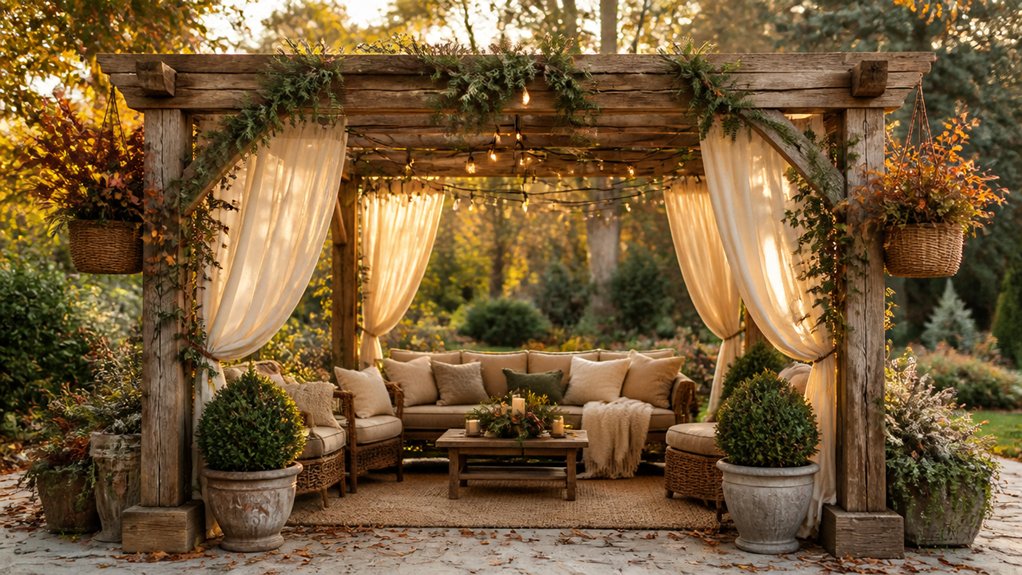
A pergola can be the heart of an outdoor space, but only if it’s dressed thoughtfully for every season. Summer calls for creative shade solutions—think flowing fabric drapes, retractable canopies, or even climbing vines that knit together overhead. Without proper cover, the midday sun can render the space unusable when you need it most.
When autumn arrives, the challenge shifts. Gusty winds send lightweight furnishings tumbling, so anchoring everything becomes essential. Heavy planters filled with hardy ornamental grasses or compact shrubs add visual warmth while staying put through stormier days.
It’s also the perfect window to introduce richer textures and deeper color palettes before winter sets in.
The colder months demand the most dramatic interventions. Portable heaters, fire pits, or overhead infrared elements extend comfortable use, while clear vinyl panels or weatherproof curtains block biting winds without sacrificing natural light.
Strategic lighting becomes non-negotiable as days shorten, transforming a pergola from gloomy to inviting after dark.
Some decisions transcend any single season, though. Durable, comfortable furniture, layered lighting schemes, and flexible plantings tie the year together.
The difference between a pergola that gathers dust and one that genuinely earns its keep comes down to this intentional, season-by-season planning paired with enduring foundational choices.
Summer Shade Solutions: Fabric Draping and Retractable Covers
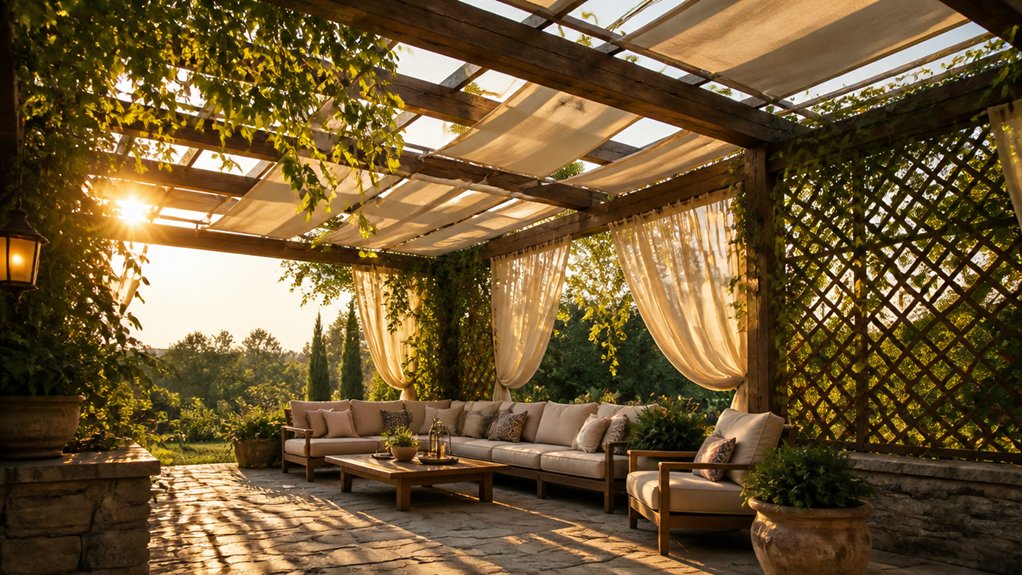
Fabric Draping Basics
Pergolas offer nice structure, but they don’t block much sun. Adding fabric changes everything. Lightweight materials like Sunbrella filter harmful UV rays while keeping air moving underneath.
You can hang fabric directly over the beams. Clips, rings, or grommets make setup simple. Take them down anytime you need a change.
Retractable Shade Systems
Sometimes you want full sun. Other times you need cover. Retractable systems give you that choice.
Panels glide across your pergola opening with a motor or by hand. Adjust them as the day goes on. These work especially well for patios that serve double duty.
Choosing Your Fabric
Outdoor-rated fabrics hold up against the elements. Look for resistance to fading, mildew, and water damage.
Soft neutrals blend nicely with most yards. Think tan, gray, or cream. And always plan for rain. Good drainage stops water from collecting where you don’t want it.
Protect Your Pergola in Fall: Wind-Resistant Plants and Décor
Fall winds will test your pergola soon. Picking the right plants keeps your space looking great through every storm.
Ornamental grasses move beautifully in strong gusts. Fountain grass and feather reed grass bend without snapping. Their gentle sway adds life to your outdoor area.
Climbing vines grip tightly once established. Boston ivy and clematis grow deep roots that steady nearby structures. These plants work hard to protect your setup.
Decor That Stays Put
Metal sculptures and heavy planters rarely tip over. Weight matters when gusts pick up speed.
Secure fabric panels with sturdy clips and ties. Reinforced hardware keeps string lights in place through rough nights. Low ceramic or stone accents stay grounded by design.
Lightweight items should come indoors before storms hit. A quick check of joints and fasteners now prevents bigger headaches later. Your pergola will thank you when autumn winds arrive.
Winter Warmth and Protection: Heating and Enclosure Options
Heating Your Pergola
Extended outdoor comfort takes some planning when cold weather arrives. Overhead heaters come in electric or propane models. Both types give gathered groups targeted warmth.
Enclosure Options
Clear vinyl panels attach directly to pergola frames. They let light through but block wind and keep heat inside. Retractable screens and polycarbonate coverings work the same way. You can remove these panels when spring returns. Storage is simple until next winter.
Weatherproof curtains hang from pergola beams. Vinyl or acrylic fabrics work best. They shield against cold air and light rain. Installation is straightforward.
Combining Solutions
Heating and enclosure systems work best together. This pairing traps warm air and blocks cold drafts. The result is a functional outdoor living space. Your pergola stays usable well past typical patio season.
Layer Lighting Year-Round
Lighting transforms a pergola from day to night. It creates a space you can use after sunset. Layered light sources add depth and warmth all year long.
String lights hung across beams give soft, even glow. Drape them along edges for a gentle effect. Recessed lights in posts or overhead panels suit modern styles. Uplighting from the ground shows off plants and structure.
Spotlights on seating areas improve safety. They also draw the eye to your best features. Solar options keep energy costs low. Installation stays simple.
Warm light around 2700 Kelvin feels relaxed and inviting. Dimmable fixtures let you shift mood by season or activity. Place lights with care. Avoid harsh shadows where people gather.
Use Plants as Seasonal Décor
Plants offer a practical way to refresh a pergola’s appearance throughout the year. Seasonal vegetation brings changing visual interest. You won’t need many structural modifications.
Spring and Summer
Spring invites climbing vines like clematis and honeysuckle. These plants establish foliage and flowers as temperatures warm.
Summer needs dense green coverage. Fast-growing varieties such as Boston ivy or morning glories work well. They offer shade plus aesthetic appeal.
Fall and Winter
Fall plantings can feature ornamental grasses, chrysanthemums, or Japanese maple. These deliver warm color tones.
Winter calls for evergreen selections. Ivy, boxwood, or juniper uphold structure and visual presence during dormant months.
Simple Rotation Tips
Rotating plantings between seasons keeps your pergola interesting. You avoid permanent installations.
Container plants around posts allow flexible updates. Choose varieties suited to your local climate zone. This guarantees reliable growth and longevity across all seasons.
Select Durable Furniture for Your Pergola
Seasonal plantings add visual interest above. The furniture below grounds your pergola in comfort. Choose seating and tables wisely. They need to last through changing weather.
Weather-resistant materials work best outdoors. Teak, aluminum, and wrought iron handle moisture and temperature shifts well. They also stand up to UV exposure. Look for cushions in solution-dyed acrylic. This fabric resists fading and moisture damage.
Think carefully about furniture placement. Set seating where overhead structures provide the most shade. Natural wind protection matters too. Lightweight aluminum chairs move easily. You can rearrange them for different seasons and gatherings.
Quality construction pays off over time. Check joints, hardware, and frame integrity before buying. Higher-grade materials cost more upfront. You will replace them less often. That makes them a smart long-term choice.
Maintain Your Pergola Between Seasons
Year-Round Care Basics
Seasonal care keeps your pergola functional and beautiful. Inspect it regularly for damage, loose fasteners, and wood deterioration.
Don’t forget the small details. Catching problems early saves you from bigger headaches later.
—
Winter Prep
Remove hanging baskets, cushions, and fabric drapes before cold weather arrives. Clean gutters and drainage areas thoroughly. This prevents water pooling and dangerous ice formation.
—
Spring Tune-Up
Apply sealant or stain to wood surfaces once temperatures rise. Swap out worn hardware and check for pest damage. Spring is also ideal for addressing any issues winter may have caused.
—
Summer Upkeep
Give your pergola an occasional cleaning. Dirt and pollen build up quickly during these months. A quick wash keeps everything looking fresh.
—
Fall Tasks
Trim back climbing vines before they overgrow. Clear fallen leaves promptly and inspect the roof structure. Store removable furniture and accessories properly. Good storage extends their life significantly.
—
Why It All Matters
Regular maintenance prevents expensive repairs. Your pergola stays structurally sound through every season. That peace of mind is worth the effort.
Frequently Asked Questions
What Pergola Size and Style Work Best for Small Residential Yards?
For compact spaces, homeowners should consider pergolas measuring 8×8 or 10×10 feet. Open lattice designs and minimalist styles work best, as they occupy less visual space while providing shade and structure without overwhelming intimate yards.
How Much Does It Cost to Build and Decorate a Pergola?
A basic pergola typically costs $1,000 to $5,000 to build, depending on size and materials. Decorative additions like lighting, plants, and furniture range from $500 to $3,000, bringing total expenses between $1,500 and $8,000.
Do I Need a Permit or Professional Installation for My Pergola?
Like Prometheus bringing fire to mortals, one must navigate local building codes first. Most jurisdictions require permits for permanent structures. Professional installation guarantees compliance, though handy homeowners may self-build smaller pergolas following guidelines.
What Are the Best Pergola Materials for Different Climate Regions?
Wood suits temperate zones but requires maintenance. Aluminum withstands harsh weather and coastal salt spray. Vinyl resists moisture and extreme temperatures. Composite materials offer durability across diverse climates with minimal upkeep demands.
How Can I Incorporate Water Features or Fire Elements Into Pergolas?
One can add water features by installing fountains or pond basins beneath pergolas, creating serene focal points. Fire elements include built-in grills, fire pits, or tabletop fireplaces positioned safely at a distance, enhancing ambiance and functionality.
Conclusion
A pergola transforms into a four-season sanctuary when layered with intentional design choices. Fabric draping, strategic lighting, wind-resistant plants, and weather protection work like puzzle pieces, fitting together to create comfort across months. Durable furniture and seasonal maintenance serve as the foundation supporting this outdoor space. With these elements in place, the pergola becomes a reliable gathering spot, weathering each season’s demands while maintaining its welcoming function.