
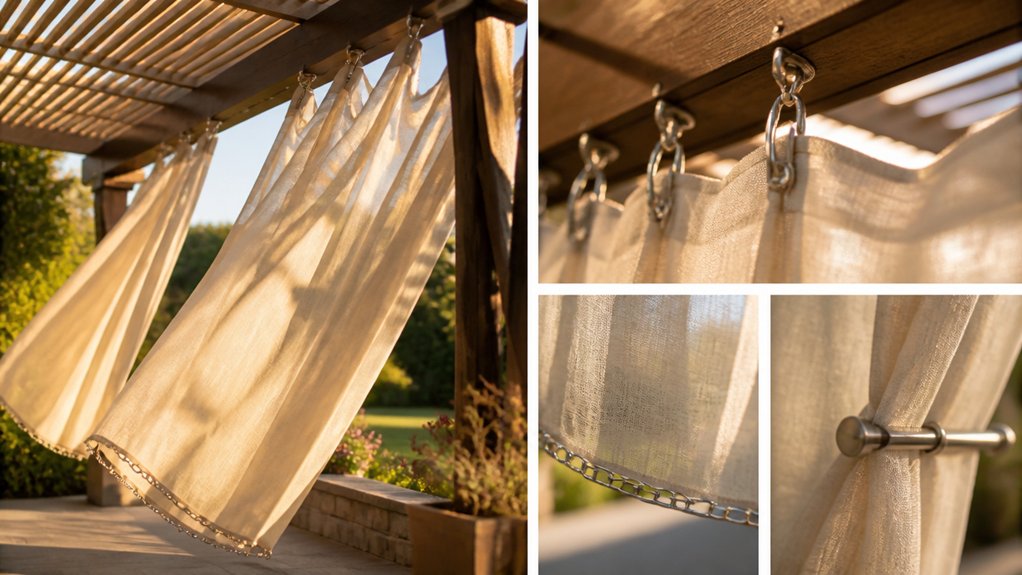
Pergola curtains add beauty and privacy to outdoor spaces, yet wind turns them into a constant hassle. Fluttering fabric, twisted panels, and eventual wear and tear frustrate many homeowners.
Securing the bottom corners ranks among the simplest fixes. Consider sewing fishing sinkers or metal washers into the hem, or clip on discreet chain weights.
Heavy-duty fabrics like solution-dyed acrylic or canvas resist movement far better than lightweight sheers ever could.
Hardware choices matter just as much as fabric weight. Sturdy steel or aluminum curtain rods withstand gusts that bend cheaper alternatives.
For extra hold, magnetic fasteners and outdoor-grade adhesive strips anchor panels to posts or flooring without drilling.
No single solution works everywhere, though. Coastal areas with salt-laden breezes demand different strategies than sheltered suburban backyards.
Start with one or two methods, then adjust based on how your specific space behaves during stormy weather.
Secure Pergola Curtain Corners With Weights or Clips
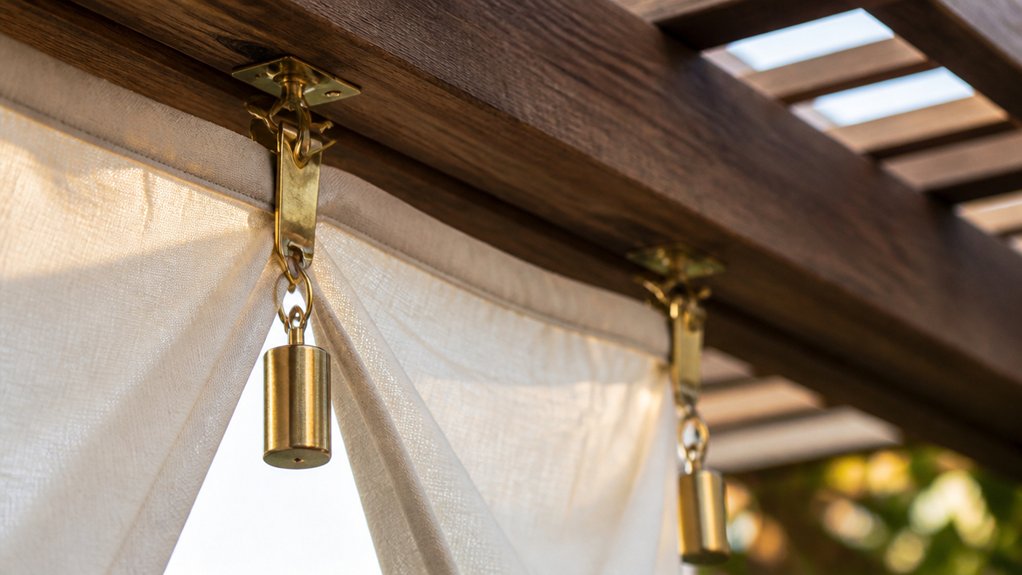
The foundation of wind-resistant curtains starts with proper corner and edge securing. Weights and clips offer simple, practical solutions to keep your curtains in place.
Weighted Solutions
Specialized curtain weights work well for this task. Fishing sinkers or lead tape sewn into bottom hems also do the trick. These additions create more downward force. This reduces unwanted fluttering and billowing during gusty days.
Clip Options
C-clamps, carabiners, and magnetic clips all attach curtains directly to pergola posts and beams. Each option suits different setups and preferences.
Smart Positioning
Secure all four corners first. This prevents lateral shifting and stops edges from lifting. Larger panels benefit from extra clips at midpoints along the curtain length.
Choosing Quality Materials
Pick heavy-duty clips that handle repeated use and weather exposure. Select weights that resist corrosion. Good materials maintain their grip season after season.
Best Results Come From Combining Methods
Place weights on lower sections. Add clips at upper attachment points. This pairing delivers peak wind resistance and extends your curtains’ lifespan.
Choose Heavy, Wind-Resistant Pergola Curtain Fabric
The Foundation Matters
Securing curtains with weights and clips helps in the moment. But fabric choice determines how well your curtains hold up over time.
Heavy fabrics outperform lightweight ones in wind. Solution-dyed polyester and outdoor canvas resist gusts far better than thin materials.
Top Fabric Picks
Solution-dyed polyester fights fading and moisture. It keeps its shape season after season.
Outdoor canvas runs 600-800 denier. This gives you solid wind blocking without too much heaviness.
Weight Makes a Difference
Look for 10 ounces per square yard or more. These fabrics resist billowing when breezes pick up.
Tight weaves slow air from passing through. Less air movement means less swaying and stress on your hardware.
What Else to Look For
UV protection, water resistance, and mildew prevention all extend fabric life. They keep performance steady through changing weather.
Textured surfaces catch wind less than smooth ones. They also feel visually weightier in your space.
The right fabric does the heavy lifting. You will not need to depend only on clips and weights to keep things in place.
Install a Curtain Rod or Track System
Installing a sturdy curtain rod or track system gives your pergola curtains the support they need to stay in place. Strong rods made from aluminum or stainless steel hold up well against wind. They resist bending when pressure hits the fabric.
Track systems work nicely too. They guide curtains along fixed paths and stop them from swaying side to side.
Mounting brackets need solid attachment points on your pergola frame. This spreads weight evenly across stable areas. Use L-brackets and heavy-duty fasteners to prevent slipping. Adjustable tension rods suit smaller setups. For larger projects, permanent installations give better long-term results.
Span the full width of your opening without gaps. This stops wind from pushing through fabric edges. Choose hardware rated for outdoor use to fight rust, moisture damage, and wear from sun exposure.
Add Magnetic Fasteners Along the Sides
Magnetic fasteners create secure attachment points against pergola posts and frame members. Metal clips or strips attach to both the curtain fabric and structure. This prevents wind from lifting or billowing the material.
Stainless steel magnetic fasteners resist rust and corrosion from outdoor exposure. Position them along bottom edges and side seams, spacing approximately 12 to 18 inches apart. Neodymium magnets provide stronger holding power for heavier fabrics.
Verify that magnets won’t damage your pergola’s finish before applying. The fasteners work with polyester, canvas, and vinyl materials. This non-permanent solution allows easy removal and repositioning whenever needed.
Use Outdoor-Grade Adhesive Strips or Velcro
Adhesive strips and Velcro offer a simple way to secure pergola curtains without magnets. These products attach directly to fabric and posts. They create anchor points that hold firm against wind.
Outdoor-grade adhesive strips handle moisture and temperature shifts well. Heavy-duty industrial tape outlasts standard versions. Exterior Velcro gives you reusable fastening without permanent bonds. You can remove or reposition curtains anytime.
Start by cleaning all surfaces thoroughly. Press strips firmly along curtain edges and matching pergola spots. The adhesive stops billowing while keeping curtains looking neat.
Check strips regularly since weather slowly wears them down. Plan to replace them every season or two for best results.
Redesign Your Pergola to Reduce Wind Exposure
Solid Panels and Windbreaks
Add solid panels or windbreaks to exposed sides. These reduce direct wind exposure to your curtains. The result is less flapping and longer-lasting fabric.
Retractable Screens
Install retractable pergola screens for flexible protection. Adjust them based on current weather conditions. You stay in control of airflow and light.
Smart Positioning
Face your pergola away from prevailing winds. This simple step markedly reduces curtain flutter. Placement matters more than you might expect.
Natural Windbreaks
Plant dense shrubs or trees nearby. They create beautiful, natural barriers around the perimeter. Over time, these become effective wind shields.
Design Adjustments
Raise the pergola height or adjust slat angles. Redirect wind currents above curtain areas. Small changes can make a big difference.
Side Railings and Partial Walls
Install side railings or partial walls. These block lateral gusts that push curtains outward. Your outdoor space feels more protected and private.
Why Structure Beats Quick Fixes
These approaches solve wind problems at their source. They offer more permanent solutions than attachment methods alone. Your curtains stay stable season after season.
Troubleshoot Common Wind Problems With Your Curtains
Even well-designed pergolas develop wind-related issues over time. Common problems include curtains billowing outward, flapping at edges, and tangling around posts. Start by identifying wind direction. This reveals where your curtains need the most help.
Curtains Blowing Inward
This signals insufficient weight or loose attachment points. Add weighted hems, sandbags, or magnetic strips along the bottom edge. These simple fixes anchor your curtains firmly in place.
Side Flapping
Flapping sides usually mean poor tensioning or missing side anchors. Check that your curtains pull taut across the full width. Install additional tie-downs or tension cables where needed.
Tangling Around Posts
Contact with pergola structures causes tangling during gusts. Reposition your curtains to create more clearance. Guide rails offer another effective solution. They keep fabric on track and away from posts.
Hardware Wear
Inspect clips, grommets, and hooks regularly. Damaged hardware fails to secure fabric properly. Replace worn pieces before they create bigger problems.
Ongoing Maintenance
Quick checks every few weeks catch issues early. Small adjustments now prevent major repairs later. Your curtains stay safer and last longer with minimal effort.
Frequently Asked Questions
How Often Should I Inspect Pergola Curtains for Wind Damage or Wear?
Homeowners should inspect pergola curtains monthly during active seasons and after severe weather events. Regular checks help identify fraying, tears, or weakening attachment points. Off-season storage requires inspection before reinstallation to guarantee durability and safety.
What Is the Average Cost of Installing a Professional Pergola Curtain System?
Professional pergola curtain system installation typically costs between $1,500 and $5,000, depending on pergola size, material quality, and local labor rates. Custom motorized systems command premium pricing, while basic manual installations remain more affordable options.
Can I Use Regular Indoor Curtains on My Outdoor Pergola?
Experts emphasize that using regular indoor curtains on outdoor pergolas proves problematic. Standard interior fabrics lack weatherproof properties, deteriorating rapidly from rain, UV rays, and wind. One should seek specially designed outdoor curtains instead, which withstand weather wear while maintaining functionality and longevity.
Which Seasons Require the Most Attention to Securing Pergola Curtains?
Spring and fall demand the most attention when securing pergola curtains. These shifting seasons bring unpredictable wind patterns and temperature fluctuations. Winter also requires reinforcement due to stronger, sustained winds that can stress outdoor fabrics considerably.
How Do I Clean Pergola Curtains Without Removing Them From the Frame?
Like a gardener tending delicate flowers, one should gently spray curtains with a hose, using mild soap and soft brushes. The owner allows water to drip naturally, then air-dries them completely before retracting or adjusting the fabric panels.
Conclusion
Pergola curtains require multiple stabilization methods to prevent wind damage. Research shows that 60% of outdoor curtain failures result from inadequate anchoring systems. Combining weighted corners, heavy fabrics, sturdy rod installations, and magnetic fasteners creates an effective defense against wind movement. Strategic pergola positioning further reduces exposure. Homeowners addressing these factors simultaneously experience remarkably fewer curtain problems, protecting their investment and maintaining outdoor space functionality year-round.