
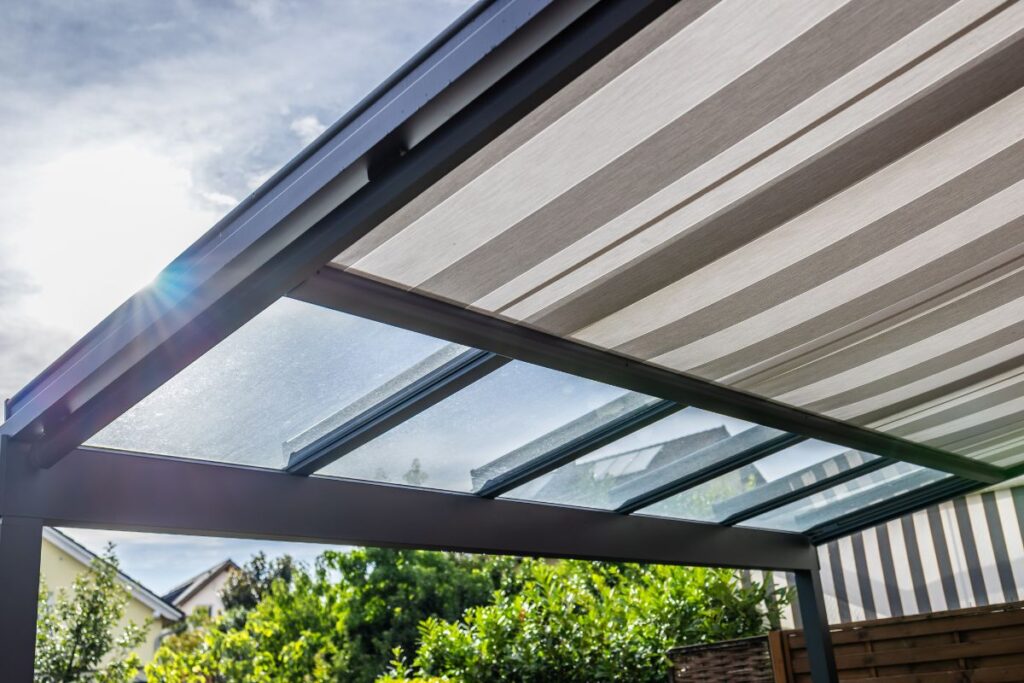
A patio cover looks like a simple project until you start pricing panels. Then you discover that the same 12 by 16 foot structure can cost you $900 or $9,000 depending entirely on what goes over the top of it.
The roof is the part that decides everything else. It controls how hot the space gets in July, whether you can sit outside during a downpour, how much light reaches the plants and the windows behind it, and how often you will be up on a ladder with a hose and a scrub brush. Get it right and the patio becomes the room you use most. Get it wrong and you have built an expensive shade structure that drips, bakes, or turns green after two seasons.
Here is what actually works, sorted by the kind of patio you are trying to build.
Start With How You Plan to Use the Space
Before you compare products, get clear on what the cover needs to do. The answer changes the shortlist completely, and it saves you from buying a premium material that solves a problem you never had.
Ask yourself these questions first:
- Do you need full rain protection, or just relief from midday sun?
- Is there a window or room behind the patio that will lose light once you cover it?
- How much noise can you tolerate during heavy rain?
- Will you be attaching the cover to the house, or standing it free in the yard?
- Do you want to do this yourself, or hire it out?
Someone who wants a dry outdoor dining room in Seattle needs a different roof than someone who wants filtered light over a Phoenix seating area. Both are valid. They just do not share a shopping list.
Solid Roofing Options for Full Weather Protection
These materials block sun and rain completely. They give you the most usable space in bad weather, and they generally last the longest, though they also make the patio darker and can shade adjacent rooms.
Metal Panels
Corrugated steel and standing seam aluminum have quietly become the default choice for patio covers, and for good reason. Panels are light, they span long distances without heavy framing, they shed water instantly, and a good factory finish will hold its color for decades.
The practical appeal is the ratio of effort to result. A weekend and a helper gets you a finished roof. A quality metal roofing system handles hail, high wind, and heavy snow load better than almost anything else in this price bracket, and it will not rot, warp, or feed insects. Reflective and light colored finishes bounce a meaningful amount of solar heat instead of holding it the way asphalt does.
The trade off is sound. Rain on bare metal is loud, and what feels cozy in a light shower gets tiring in a storm. Adding a layer of insulation board or choosing insulated sandwich panels takes care of most of it. Expect roughly $4 to $12 per square foot installed, depending on gauge and profile.
Asphalt Shingles
If your patio cover attaches to the house and you want it to disappear into the roofline, shingles are the easy answer. You match the existing roof, the transition looks intentional, and the material is cheap and available everywhere.
Shingles do demand a real roof deck underneath, along with underlayment and adequate pitch, so the framing cost rises even though the material cost drops. They also absorb heat, which means an enclosed patio under dark shingles will run warm. Budget $3 to $6 per square foot, and plan on replacement in 15 to 25 years.
Wood and Cedar Shakes
Nothing else gives you the warmth of exposed timber and a shake roof. Western red cedar resists rot naturally, ages into a soft silver grey, and suits craftsman, rustic, and coastal houses in a way manufactured products struggle to imitate.
You pay for that look with maintenance. Cedar needs cleaning and resealing every few years, it can be restricted in fire prone areas, and in humid climates it grows moss faster than you would like. Costs typically run $7 to $14 per square foot.
Clay and Concrete Tile
Tile is the right call when the house already wears it. Mediterranean, Spanish colonial, and southwestern homes look wrong under anything else, and tile handles intense sun better than nearly every alternative while staying cool underfoot in the attic space above.
The weight is the catch. Tile roofs demand serious framing, and that structural upgrade usually costs more than the tile itself. This is not a DIY project. Plan on $10 to $20 per square foot all in.
Light-Transmitting Panels for Brighter Patios
These options keep rain out while letting light through, which matters enormously if the patio sits in front of a kitchen or living room window.
Polycarbonate Panels
Twin wall and multiwall polycarbonate has become the workhorse of the bright patio cover. The panels are shockingly light, virtually unbreakable, available in clear, opal, bronze, and heat blocking tints, and they cut with a circular saw.
Multiwall versions trap air between layers, so they diffuse harsh light and reduce heat transfer better than the single skin corrugated sheets. Look for panels with a co-extruded UV coating, because the cheap uncoated ones yellow and go brittle within a few years. Quality panels carry 10 to 15 year warranties and cost roughly $3 to $8 per square foot.
Corrugated Fiberglass
Fiberglass sheets are the budget entry into translucent roofing, and they are genuinely useful over utility spaces, carports, and side yards. They are cheap, easy to handle, and simple to install over purlins.
They also age visibly. Expect chalking, fiber bloom, and a gradual loss of clarity after five to ten years. At $1.50 to $4 per square foot, that may be an acceptable bargain.
Glass
Structural glass roofs deliver a result nothing else matches, turning the patio into something closer to a conservatory. Laminated safety glass with a low emissivity coating controls solar gain while keeping the view of the sky intact.
It is expensive, heavy, and requires precise engineering and professional installation. It also shows every leaf, water spot, and bird strike. Costs start around $25 per square foot and climb quickly.
Adjustable and Fabric Covers
Some patios are better served by a roof you can change rather than one you commit to.
Louvered Aluminum Pergolas
Motorized louvered systems let you rotate the blades from open sky to a sealed watertight roof in under a minute. Powder coated aluminum resists corrosion, the frames handle wind well, and integrated gutters channel water away through the posts.
This is the premium end of the category. Expect $30 to $80 per square foot installed, with motorization, sensors, lighting, and heaters adding more.
Shade Sails and Canvas
Fabric covers are the fastest and cheapest way to make a patio usable in summer. HDPE shade cloth blocks 80 to 95 percent of UV while letting air pass through, which keeps the space noticeably cooler than a solid roof over a small area.
Fabric does not stop rain, it needs taking down before winter storms in most climates, and it typically lasts five to ten years. For $200 to $1,500, that is a reasonable trade.
Comparing the Options at a Glance
The table below summarizes the practical differences so you can narrow the field quickly.
| Material | Cost per sq ft | Lifespan | Rain proof | Lets light through | DIY friendly |
|---|---|---|---|---|---|
| Metal panels | $4 to $12 | 40 to 70 yrs | Yes | No | Yes |
| Asphalt shingles | $3 to $6 | 15 to 25 yrs | Yes | No | Moderate |
| Cedar shakes | $7 to $14 | 20 to 30 yrs | Yes | No | Moderate |
| Clay or concrete tile | $10 to $20 | 50+ yrs | Yes | No | No |
| Polycarbonate | $3 to $8 | 10 to 20 yrs | Yes | Yes | Yes |
| Fiberglass | $1.50 to $4 | 5 to 12 yrs | Yes | Yes | Yes |
| Glass | $25+ | 30+ yrs | Yes | Yes | No |
| Louvered aluminum | $30 to $80 | 25+ yrs | Adjustable | Adjustable | No |
| Shade fabric | $2 to $6 | 5 to 10 yrs | No | Partially | Yes |
Let Your Climate Narrow the Choice
Regional conditions eliminate more options than personal taste does. Work through your own weather before you fall in love with a look.
Heavy snow country. Standing seam metal at a steep pitch sheds snow load reliably. Avoid low slope fabric and thin polycarbonate, both of which can collapse under accumulation.
Hot and sunny. Reflective metal, tile, or tinted multiwall polycarbonate all reject heat well. Dark asphalt is the one to skip, since it radiates warmth downward long after sunset.
Wet and humid. Choose materials that dry fast and resist biological growth. Metal and polycarbonate stay clean with a rinse, while cedar and asphalt need active maintenance.
Coastal and high wind. Marine grade aluminum and properly rated fasteners matter more than the panel choice itself. Check local uplift requirements before you buy anything.
Mistakes That Cost People Money
A few errors show up again and again on patio cover projects, and every one of them is avoidable at the planning stage.
- Skipping the permit. Attached covers usually require one, and an unpermitted structure becomes a problem at resale.
- Building too flat. Even a roof marketed as watertight needs slope. Aim for a minimum quarter inch of fall per foot.
- Ignoring drainage. Water has to go somewhere other than the back door threshold or the foundation.
- Buying uncoated plastic panels. The savings evaporate the first time you replace them.
- Forgetting the room behind it. A solid roof over a south facing patio can turn a bright kitchen dim year round.
Frequently Asked Questions
Which roofing material lasts longest on a patio cover? Metal and tile both routinely pass 50 years. Metal wins on cost and weight, while tile wins on appearance if the house already suits it.
Can I put a patio roof over an existing concrete slab? Usually yes, provided the slab is thick enough and in good condition to carry post footings. An inspector or contractor can confirm before you start.
What is the cheapest way to cover a patio properly? Corrugated polycarbonate or fiberglass over a simple treated timber frame gives you real rain protection for the least money, often under $1,500 for a modest area.
Do I need gutters? On any solid roof draining toward the house, a walkway, or a seating area, yes. Runoff from even a small patio roof is more water than people expect.
Choosing With Confidence
Most people overthink the aesthetics and underthink the climate. Decide first whether you need rain protection or shade, then check what your local weather rules out, and the shortlist usually shrinks to two or three genuine candidates.
If you want durability without the budget of tile or glass, metal remains the most forgiving choice available. If light matters more, multiwall polycarbonate with a proper UV coating will serve you well for a decade or more. Either way, spend the extra money on the framing and the drainage rather than the finish. That is the part you cannot fix later.