
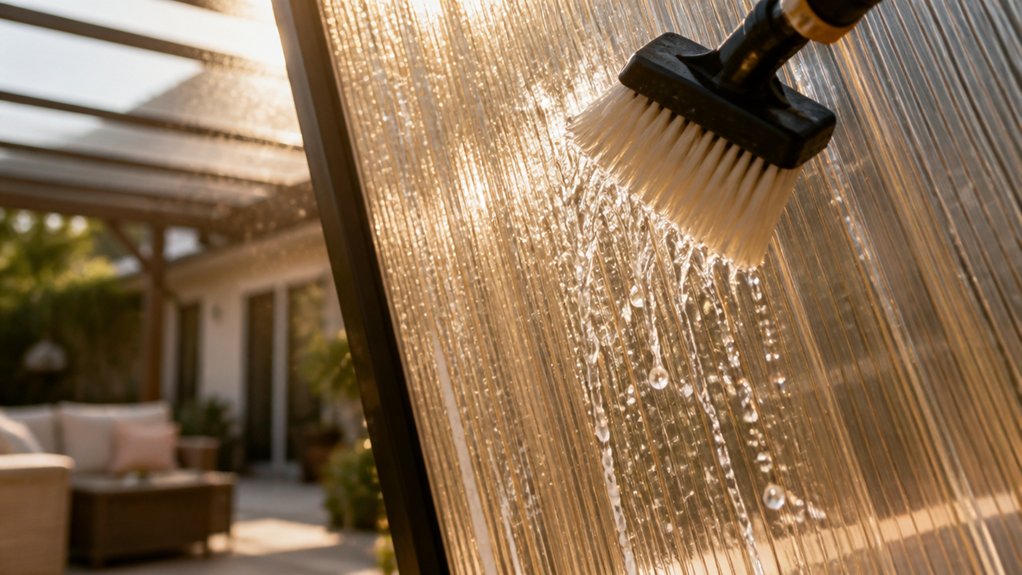
Polycarbonate patio roofs are prone to accumulating dirt, algae, oxidation, and mineral deposits over time. These substances gradually reduce the roof’s transparency and can compromise its durability if left unaddressed.
Identifying what type of stain you’re dealing with is the first critical step before you proceed with cleaning. Different stains require different solutions and tools to be removed effectively.
Using the wrong cleaning method on your polycarbonate panels risks permanent scratching or damage that cannot be repaired. Taking time to assess the problem correctly will save you from costly mistakes down the road.
Start by removing any loose debris from the roof surface using a soft brush or cloth. Once you’ve cleared away the loose material, apply an appropriate cleaning mixture based on the stain type you’ve identified.
Whether it’s algae, mineral buildup, or oxidation, selecting the right cleaner makes a significant difference in results. After applying your chosen cleaning solution, rinse the panels thoroughly with clean water to remove all residue.
Proper rinsing prevents streaking and ensures no harsh chemicals remain on the surface. Taking this careful, methodical approach protects your investment while restoring your roof’s clarity and longevity.
Inspect Your Polycarbonate Roof First
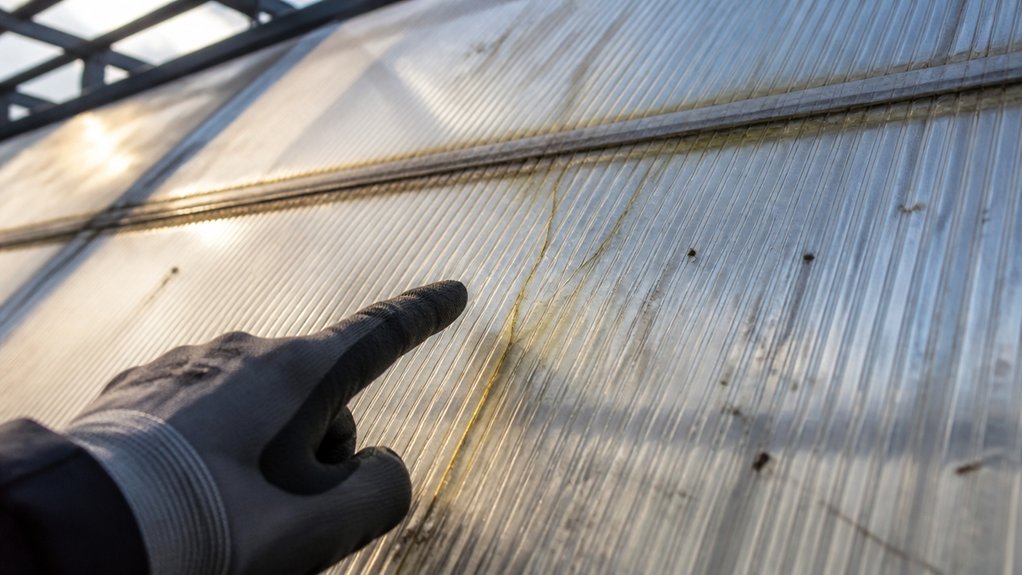
Start by examining your polycarbonate panels closely. Look for cracks, cloudiness, or discoloration, which signal UV damage or material breakdown. Check the seals and joints where panels meet for gaps or worn spots that let water seep through.
Remove leaves, branches, and dirt sitting on top. Then check your gutters and downspouts to make sure water flows properly.
Scan the surface for algae, moss, or mold patches. Pay attention to spots where water pools instead of draining, since these areas need extra care during cleaning.
Take notes or photos of any damage you find. This helps you decide if simple cleaning will work or if repairs need to come first.
Identify Your Stain Type: Algae, Oxidation, or Mineral Buildup
Identify Your Stain Type: Algae, Oxidation, or Mineral Buildup****
Stains on your polycarbonate roof tell a story. Knowing what caused them helps you pick the right cleaning solution instead of guessing.
Algae
Green or black patches usually show up in shady, damp spots. This is algae, and it loves moisture. A mild detergent solution works well to tackle it.
Oxidation
A cloudy, white coating spreading across your roof signals oxidation. This needs a specialized polycarbonate cleaner with mild acids to break it down effectively.
Mineral Buildup
Hard water leaves chalky white streaks and spots behind. These calcium and lime deposits need products made to dissolve them.
Why Identification Matters
Using the wrong cleaner can damage polycarbonate or simply won’t work. A quick look at your roof’s location and local climate usually reveals the culprit. Shady areas prone to algae, while sunny spots tend toward oxidation. This simple step saves you time and ensures great results.
Gather Your Cleaning Supplies and Tools
Before you start, collect everything you’ll need. This stops you from running around mid-clean looking for missing items. You’ll work faster and stay focused when supplies are within arm’s reach.
Basic tools include a soft-bristled brush, garden hose, and bucket. For cleaning solution, pick mild dish soap, white vinegar, or a polycarbonate cleaner based on what stains you’re dealing with. Grab gloves, eye protection, and non-slip shoes to stay safe while working.
A ladder or step stool gets you safely to high spots. Microfiber cloths prevent streaking as you dry. A squeegee removes extra water from stubborn mineral deposits quickly. Use a spray bottle to spread cleaning solution evenly. Keep towels nearby to catch drips and protect the area below.
Remove Loose Debris and Rinse the Panels
Remove Loose Debris and Rinse the Panels****
Clear away leaves, dirt, and any debris on your patio roof. Grab a soft-bristled broom and gently sweep from one end to the other. Keep it light since polycarbonate scratches easily.
Rinse everything down with your garden hose next. Start at the top and let the water flow downward naturally. This washes away dust, pollen, and loose particles you just swept up.
Stubborn debris wedged between panels or in corners needs a soft cloth or plastic scraper. Skip metal tools and pressure washers entirely. They’ll damage the material. Let all the water drain completely before moving on to the next step.
Apply Your Cleaning Solution
Mix mild dish soap, water, and a bit of white vinegar in a bucket. This simple combination removes dirt, algae, and mineral buildup without harming your polycarbonate panels.
Use a soft-bristled brush or sponge to apply the solution. Work across the roof in small sections, steering clear of abrasive scrubbers that could scratch the material. Focus on areas that look dirty or discolored.
Let the solution sit for a few minutes on the panels. This gives it time to break down tough stains without you having to scrub hard. Heavily soiled spots might need a second coat before you rinse everything clean with water.
Clean and Dry Without Scratching
Rinse Away the Residue
Once your cleaning solution has done its job, it’s time to rinse thoroughly. This removes soap, vinegar, and loosened dirt from the surface. Use a garden hose on moderate pressure and spray from top to bottom in overlapping passes to avoid damage.
Dry Smart to Avoid Streaks
Microfiber cloths beat standard towels every time. They soak up moisture without leaving streaks or lint. Chamois leather also works great on polycarbonate surfaces. The key is wiping in straight lines, not circles, which can leave visible marks.
Handle Water Spots
Mineral deposits sometimes stick around after drying. Mix equal parts white vinegar and distilled water to tackle them. Apply the solution sparingly with a soft cloth and dry right away. Let the roof air-dry completely before closing or covering it. This prevents moisture from getting trapped and stops mold from forming.
Maintain Your Roof to Prevent Future Buildup
Maintain Your Roof to Prevent Future Buildup****
Monthly inspections catch debris, algae, and mineral deposits early. Remove leaves and twigs so water doesn’t pool in corners. A quick rinse with your garden hose every few months clears light dust and pollen without harm.
Clean gutters and downspouts keep water flowing properly. Trim tree branches overhead to reduce falling leaves and shade that feed algae growth. Tackle small problem areas right away before they spread.
Spring and fall are ideal times for seasonal maintenance. This keeps your roof clear, protects its structure, and saves money on cleaning down the road.
Frequently Asked Questions
How Often Should I Clean My Polycarbonate Patio Roof to Prevent Damage?
One should clean a polycarbonate patio roof every three to six months, depending on environmental conditions. Areas experiencing heavy debris, pollen, or pollution may require more frequent cleaning to prevent material degradation and maintain clarity.
Can I Use a Pressure Washer on Polycarbonate Panels Without Causing Harm?
One should not put all eggs in one basket by defaulting to pressure washers on polycarbonate panels. High-pressure water can crack or damage the material. Instead, use gentle methods like soft brushes, mild soap, and low-pressure rinsing to safely clean panels effectively.
What Is the Best Time of Year to Clean a Polycarbonate Roof?
Spring and fall represent ideal times for cleaning polycarbonate roofs. Mild temperatures prevent material stress, while moderate weather conditions facilitate drying. Homeowners should avoid winter’s extreme cold and summer’s intense heat, which can compromise the panel’s structural integrity during cleaning procedures.
Are There Eco-Friendly Cleaning Solutions Safe for Polycarbonate Materials?
Yes, eco-friendly solutions work well for polycarbonate. Mild dish soap mixed with water effectively removes dirt without damaging the material. Vinegar solutions also prove safe. One should avoid abrasive chemicals and bleach, which can cause discoloration and degradation of the polycarbonate surface.
How Long Does Polycarbonate Typically Last With Proper Cleaning and Maintenance?
Like a tree flourishing with proper nourishment, polycarbonate roofing thrives under consistent care. With diligent cleaning and maintenance, one’s patio roof typically endures fifteen to twenty years, maintaining clarity and structural integrity throughout its protective service life.
Conclusion
Cleaning a polycarbonate patio roof requires identifying stain types, gathering appropriate supplies, and applying solutions carefully. Regular maintenance keeps the roof crystal clear and extends its lifespan. Monthly inspections and light rinsing prevent algae, oxidation, and mineral buildup from taking root. Homeowners who stay on top of cleaning tasks will see the light at the end of the tunnel, avoiding costly damage and preserving transparency for years ahead.