
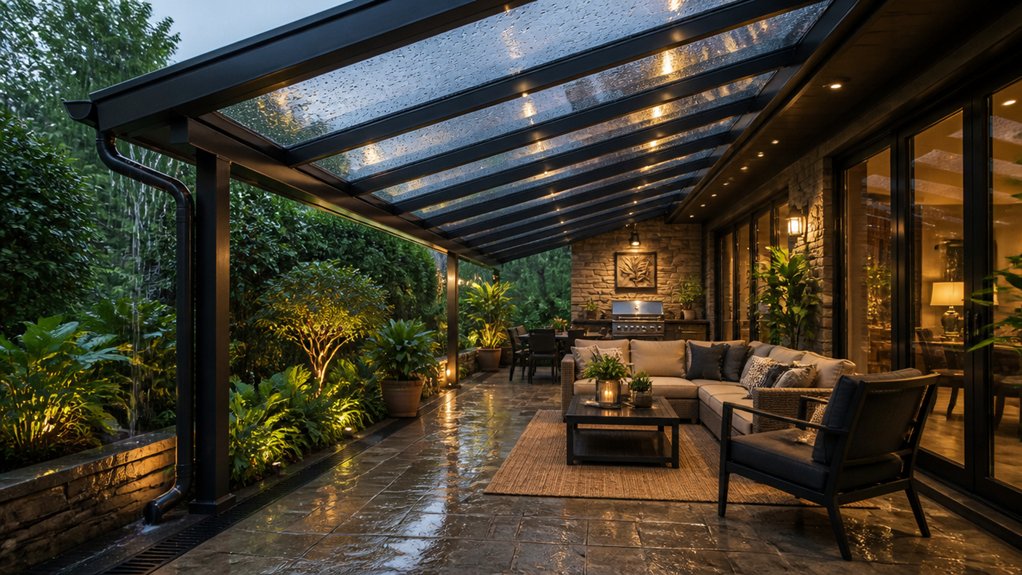
Covered patios in rainy climates demand thoughtful planning from the ground up.
Material selection forms the foundation of your project, with metal roofing, polycarbonate panels, and asphalt shingles each presenting distinct advantages for handling moisture. Getting this choice right can mean the difference between a durable outdoor space and one plagued by leaks and rot.
Slope and drainage work together as your patio’s water management system. A properly angled roof directs rainfall away from the structure rather than allowing it to collect in problematic pools.
Without adequate drainage infrastructure, even premium materials fail to protect your investment from water damage.
Different roofing options come with their own trade-offs worth considering. Metal stands up to heavy rainfall and lasts decades, though it can be noisy during storms.
Polycarbonate offers excellent light transmission and moderate durability at a lower price point. Asphalt shingles provide familiar aesthetics but typically require more maintenance in wet climates.
The ideal solution combines appropriate materials with smart engineering.
Matching your chosen roof type to proper slope angles and functional gutters ensures water moves safely away from your patio structure. Taking time to understand these elements prevents expensive repairs later and helps your covered patio serve your family reliably for years.
How to Choose a Covered Patio Roof for Rain: Key Factors
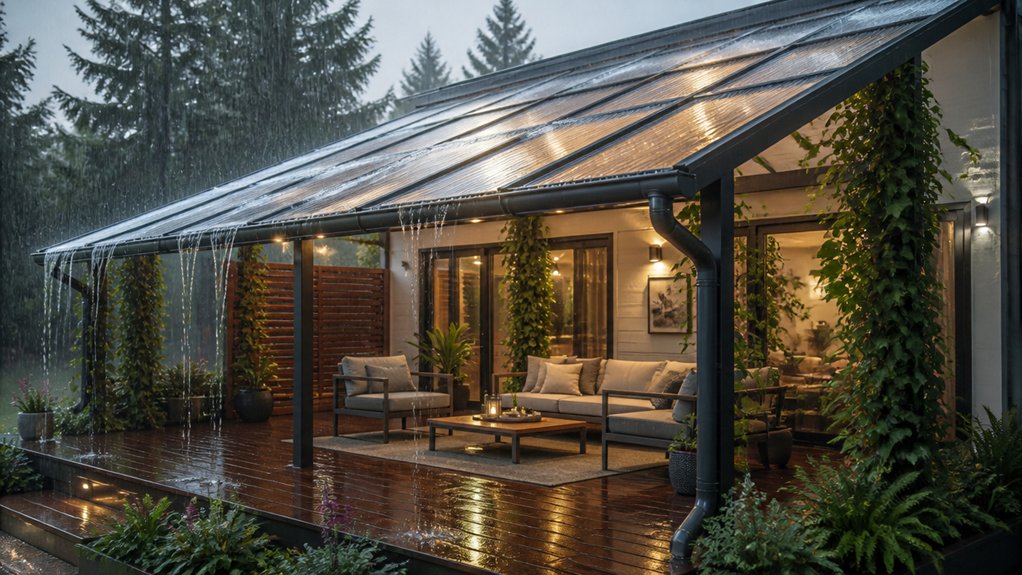
Consider Your Local Climate
Heavy rainfall areas need stronger materials than places with occasional showers. Think about how much rain your region gets annually and how intense those storms tend to be.
Pick the Right Material
Polycarbonate panels, metal roofing, and wood shingles all handle water differently. Each option comes with its own maintenance schedule and lifespan, so weigh what works best for your situation.
Get the Slope and Drainage Right
Water needs a clear path away from your patio. A steeper pitch prevents puddles from forming, while good gutters and downspouts keep everything flowing safely.
Check Building Codes First
Your area has specific rules about wind resistance and how much weight the roof can hold. These requirements vary by location, so verify what applies to you before making final decisions.
Balance Budget and Quality
Cost matters, but durability counts too. Cheaper materials might need replacing sooner, while premium options last longer but require more upfront investment.
Make Your Final Choice
Review all these factors together. The best roof for your patio combines what your climate demands, what your budget allows, and what will actually last.
Metal Roofing: Durability and Weather Resistance
Metal roofing is a top choice for covered patios in tough weather areas. Steel and aluminum panels handle rust, corrosion, and water damage with ease. They stand up to heavy rain, hail, and strong winds without breaking down.
Water drains quickly from metal roofs thanks to their smooth, angled surfaces. Installation means fastening panels to a framework and sealing the joints properly. The whole process is straightforward and reliable.
Maintenance is simple compared to wood or asphalt roofs. Just check fasteners once a year and keep gutters clear of debris. That’s really all you need to do.
Pricing falls in the moderate to high range based on material quality and how complex the installation is. One nice bonus: metal roofs reflect sunlight, which cuts down on heat buildup and saves money on cooling bills during hot months.
Polycarbonate Panels: Light and Long-Lasting Protection
Polycarbonate panels work great for covered patios. They’re lightweight plastic sheets that beat metal and wood roofing in terms of ease and cost. You get bright, natural light while harmful UV rays stay blocked out.
These panels handle tough weather like champs. Heavy rain, snow, and wind won’t crack or warp them. Plus, they need less structural support than traditional roofing, which keeps your project budget lower.
Why Choose Polycarbonate
Installation is simpler and faster than other roofing options. The panels last 10 to 15 years with just basic care. They’re also tougher than glass when it comes to impact damage.
You can pick from clear, frosted, or bronze finishes to match your style. The material naturally insulates, so your patio stays cooler in summer and warmer in winter.
Easy Maintenance and Care
Keeping them clean is simple. Just use mild soap and water to wash them periodically. This keeps the panels clear and extends their life span significantly.
Polycarbonate shines in rainy climates. Your patio stays bright and open while staying protected from the elements.
Asphalt Shingles: The Budget-Friendly Choice
Asphalt shingles are the most affordable roofing option for covered patios. They protect your outdoor space without breaking the bank. You’ll find them in various colors and styles, from architectural to three-tab designs, so matching your home’s look is easy.
Installation costs stay low compared to metal or tile roofing. This makes them accessible for almost any budget.
Lifespan and Durability
In moderate climates, expect your asphalt shingles to last fifteen to twenty years. Rainy regions may see a shorter lifespan. UV rays and moisture gradually break down the material over time.
Maintenance Requirements
Keep your shingles in good shape with simple upkeep. Remove debris regularly and check for damage once a year. Look for curling, missing pieces, or other wear signs during inspections. While they’re not the most durable choice, asphalt shingles deliver solid protection at economical prices.
Retractable Roof Systems: Flexibility for Any Season
Retractable roof systems let you control your patio coverage whenever you need it. They use motorized aluminum frames with fabric or polycarbonate panels that slide or fold away on command.
These systems shine in rainy climates. You can extend coverage during storms and pull it back when the weather clears to enjoy fresh air. Brands like Shadair and SunRoof offer remote controls and smartphone app operation for easy adjustments.
Expect to pay $3,000 to $10,000 for installation based on your patio size and system type. It costs more upfront than asphalt shingles, but you get flexibility that permanent structures can’t offer. This makes them ideal if your area experiences unpredictable weather swings.
Drainage Systems: Managing Runoff in Wet Climates
Water management matters when your patio faces constant rain or heavy storms. Gutters and downspouts keep water flowing away from your structure instead of pooling underneath. A sloped roof angled at least 2 percent helps direct everything toward your collection system.
French drains around the patio edges soak up extra moisture into the soil. Catch basins placed at low spots grab runoff before it spreads across your outdoor space. These simple additions work together to protect your investment.
Materials built for wet climates include aluminum gutters, vinyl downspouts, and PVC drainage pipes. All three hold up well against constant moisture and temperature changes. Cleaning gutters regularly and removing debris keeps everything flowing smoothly.
Good drainage stops foundation damage, mold problems, and structural issues before they start. Your patio lasts much longer when water moves away properly instead of sitting around.
Seasonal Maintenance: Rain-Climate Care
Keep Gutters Clear
Inspect your gutters and downspouts every three months. Remove leaves, debris, and sediment that pile up and block water flow.
Protect Wood From Moisture
Wood beams and posts need sealant reapplied every two to three years. This stops rot and keeps moisture from seeping in.
Check Metal for Rust
Look over your metal roof panels regularly. Pay special attention to seams and fasteners, where rust tends to start first.
Clean Concrete and Stone
Wet conditions create the perfect environment for algae and mold. Regular cleaning keeps your flooring looking fresh and prevents buildup.
Spot Water Damage Early
Soft spots, discoloration, or warping on any surface means water damage. Address these issues right away before they spread.
Apply Protective Treatments
Before heavy rain arrives, treat exposed surfaces with water-repellent products. This simple step saves you money on repairs down the road.
Frequently Asked Questions
How Much Does It Typically Cost to Install a Covered Patio Roof?
The typical cost to install a covered patio roof ranges from $3,000 to $15,000, depending on materials, size, and complexity. Aluminum structures cost less, while wood or polycarbonate options may be pricier. Professional installation greatly affects the final price.
What Permits or Building Codes Apply to Patio Roof Construction in My Area?
While building codes vary greatly by location, one must contact their local building department to determine specific requirements. Permits typically govern structural safety and setback distances, whereas inspection standards guarantee compliance with regional weather resistance standards.
Can I Install a Covered Patio Roof Myself, or Do I Need Professional Help?
Installation complexity depends on experience level and local requirements. Simple structures may suit DIY enthusiasts, but structural work typically demands professional expertise. Consulting contractors guarantees proper permits, code compliance, and safe construction in rainy climates.
How Long Do Different Patio Roof Materials Last Before Requiring Replacement?
Like seasons cycling through nature, roofing materials age at different rates. Metal roofs endure 40-70 years, while asphalt shingles last 15-25 years. Polycarbonate panels require replacement every 10-20 years, offering shorter protection despite modern durability advances.
What’s the Best Way to Prevent Mold and Mildew Growth on Patio Roofs?
One should guarantee proper ventilation beneath the roof structure and maintain regular cleaning schedules. Installing gutters with adequate drainage, applying mildew-resistant coatings, and trimming overhanging vegetation reduces moisture accumulation effectively.
Conclusion
Homeowners in rainy regions benefit from selecting appropriate roof materials, drainage systems, and maintenance schedules. Metal roofing and polycarbonate panels offer superior durability, while proper slope and gutters prevent water damage. According to the National Association of Home Builders, 85% of roof failures result from inadequate drainage. Implementing these strategies protects patios effectively, extending outdoor space usability throughout wet seasons.