
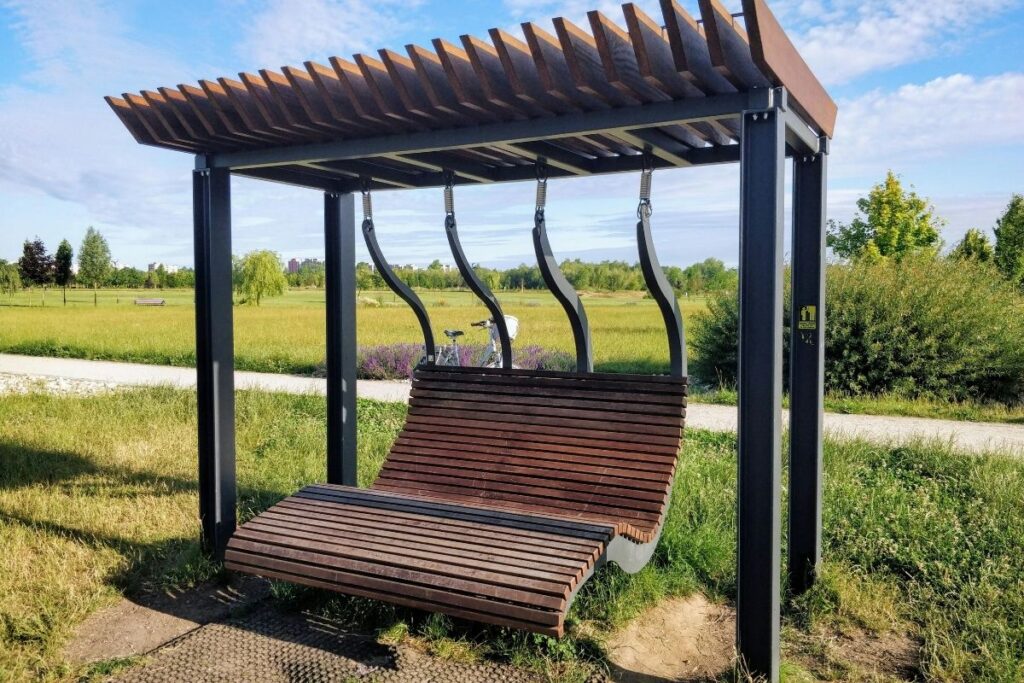
A small pergola has a habit of looking unfinished. The frame goes up, the posts get bolted down, and then it just sits there like scaffolding waiting for a purpose. That gap between “structure installed” and “space you actually want to sit in” is entirely a styling problem, and it is fixable in a weekend.
The good news is that compact pergolas respond better to styling than large ones do. Every choice you make lands harder because there is less space to dilute it. One good rug, one climbing plant and one row of lights can change the whole feel of a four by three metre footprint. A pergola twice that size would swallow all three.
What follows is a working method rather than a mood board. Start with the structure, then work outward to furniture, planting, light and seasonal layers.
Get the Bones Right Before You Style Anything
Styling cannot rescue a frame that fights the house it sits behind. Before you buy a single cushion, look hard at the structure itself and decide whether it is reading as part of the property or as an add-on parked in the yard.
Match the Timber to the House
The material sets the tone for everything else. A powder-coated aluminium frame pushes the space toward a modern, minimal look, while wood gives you warmth and a bit of texture to build against, which is why most people styling a compact outdoor area end up preferring it.
If you are still choosing your structure, spend an hour comparing what a timber pergola USA supplier offers against what your house already shows. Look at the colour of your window frames, your fence, your deck boards and your roofline. A cedar frame beside grey composite decking reads as intentional. The same cedar beside orange-toned brick and a red-brown fence starts to look like three different woods arguing.
Stain and paint are your cheapest correction tools here. Painting posts the same colour as your house trim will visually attach the pergola to the building, and that alone makes a small structure feel like an extension rather than an object.
Mind the Proportions
Post thickness matters more in a small footprint than in a large one. Thin posts on a compact pergola look flimsy, and overly chunky posts eat visual space and make the whole thing feel squat.
There are a few proportion checks worth running before you commit:
- Beam depth should be visible from the ground. If you cannot read the top structure from where you will actually sit, the pergola will feel like an open box.
- Head height needs to clear the tallest person who will use it by a comfortable margin, ideally around 2.2 metres or more at the lowest beam.
- Rafter spacing controls how much shadow you get. Closer spacing gives you a stronger striped light pattern, which is a free design feature on a plain patio.
Pick One Colour Story and Stay With It
Small spaces punish colour clutter. The fastest way to make a compact pergola look considered is to limit yourself to three colours total and repeat each one at least twice.
A reliable formula is one neutral base, one wood tone and one accent. The neutral covers your rug, cushion bases and any curtain fabric. The wood tone comes from the frame, furniture legs and any tray or side table. The accent shows up in a cushion pair, a planter and maybe a throw.
Repetition is what makes it look styled rather than random. If your accent is a rust orange, it needs to appear on both sides of the seating area, not once in a corner. The eye reads repeated colour as a plan.
Lighter neutrals will make the footprint feel larger, but you do not have to go all cream. Warm greys, oatmeal, soft sage and dusty terracotta all keep the space open while giving you something less clinical than white.
Furniture That Fits, Not Furniture That Fills
This is where most small pergolas go wrong. People buy the outdoor set they liked in the showroom, install it under a structure that was never sized for it, and lose the ability to walk around their own seating.
Measure the Footprint First
Before shopping, mark out your actual usable area with tape or chalk on the ground. Then subtract circulation space. You want at least 60 centimetres of clear walking room around the main seating, and closer to 90 centimetres on the side you enter from.
Whatever rectangle is left is your furniture budget in square metres. Shop to that number and ignore anything larger, no matter how good the sale is.
Look for Pieces That Do Two Jobs
Compact pergolas reward furniture that earns its space twice over. A few combinations that work particularly well:
- A storage bench that seats two and swallows cushions when the weather turns.
- Nesting side tables that pull apart when you have guests and stack away when you do not.
- Ottomans with flat tops that work as footrests, extra seating or a tray surface.
- A slim bar-height table against one post instead of a full dining set, if the space is genuinely tight.
Low-profile furniture is also your friend. Chairs with lower backs let your eye travel further across the space, which reads as more room even when the floor area has not changed.
Softening the Space With Textiles
Bare timber and hard paving make a pergola feel like a construction site. Fabric is what converts it into a room, and it is the cheapest change on this list.
Start underfoot. An outdoor rug defines the seating zone and instantly tells anyone walking in where the room begins. Size it so the front legs of your seating sit on it. A rug floating in the middle with furniture around the edge makes the area look smaller, not larger.
Then add outdoor curtains on two adjacent sides rather than all four. Curtaining the full perimeter closes a small pergola in and makes it feel like a tent. Two sides gives you privacy and movement while keeping a clear open view.
Finish with cushions in mixed sizes. Two large, two medium and one lumbar cushion per seating run is a good ratio. All-matching cushions in identical sizes look like a display model.
Planting Around and Over the Frame
Planting is what makes a pergola look like it belongs to the garden rather than sitting on top of it. In a small footprint you need to plant vertically, because floor space is the one thing you cannot spare.
Climbers for the Posts and Beams
A climbing plant on at least one post is close to non-negotiable. It softens the hard vertical line and starts filling the overhead frame within a season or two.
Good options for a compact structure include star jasmine for scent and evergreen coverage, clematis for seasonal flower colour, and climbing roses if you are willing to prune properly. Wisteria looks spectacular in photos but is heavy, aggressive and generally too much plant for a small frame.
Pots at the Base
Group pots in odd numbers at the base of one or two posts rather than lining them evenly around the perimeter. Odd-numbered clusters at varied heights look natural, while a symmetrical border makes the space feel boxed in.
Use tall, narrow pots where you can. They give you plant height without taking up floor width.
Hanging Layers
Hanging planters from the rafters draw the eye upward and use the one area of a small pergola that is otherwise wasted. Keep them to two or three, positioned off-centre, and choose trailing plants like string of pearls, ivy or trailing petunias so the greenery falls into the space instead of blocking it.
Lighting That Extends the Evening
Lighting is the difference between a pergola you use until sunset and one you use until midnight. Small structures need layered light rather than one bright source.
Build it in three layers. String lights along the rafters give you your ambient wash and are the single highest-impact purchase for the money. A lantern or two at floor level adds warmth at the edges. A single directional light on the plants or a feature wall creates depth, which matters enormously in a space this size.
Warm white bulbs, somewhere around 2700K, will always look better than cool white outdoors. Cool white reads as a work light and flattens everything it touches.
Shade and Shelter Without Losing the Open Feel
A pergola with open rafters gives you dappled light, which is lovely at five in the afternoon and useless at noon in July. Adding shade is usually necessary, but the method matters in a small structure.
Retractable canopies are the most flexible option because you can pull them back when you want sky. Shade sails work well at an angle and add a modern line. Reed or bamboo screening laid over the rafters is the cheapest route and gives a warm, filtered light, though it needs replacing every few seasons.
Avoid anything solid and dark overhead. A small pergola with a heavy opaque roof turns into a low, dim box very quickly.
Styling for the Climate You Actually Live In
A styling scheme that ignores your winter is a styling scheme you will dismantle in October. Think about the full year before you commit to materials.
Snow load is the main structural consideration in colder regions, and it also shapes what you can leave installed year-round. Anyone comparing a timber pergola Canada supplier’s range against warmer-climate models will notice heavier beam sizing and tighter post spacing for exactly this reason, and that same reasoning should apply to what you hang from the frame. Heavy planters, ceiling fans and solid canopies all add load.
For year-round use in a cold climate, a few adjustments help. Choose cushion covers you can strip and store easily. Pick planters that will not crack in a freeze, which means fibreglass or metal rather than terracotta. Add a portable heat source and an outdoor-rated rug that tolerates damp. Then swap textiles seasonally rather than trying to find one set that works in both August and January.
Small Details That Pull It Together
Once the big elements are in place, a handful of finishing touches will do more than you expect.
Consider adding a small side table with a tray so drinks and books have a home. Hang one piece of outdoor-rated wall art or a mirror on an adjacent fence to give the space a focal point. Add a wind chime or a water feature if you want sound. Tuck a lidded basket under a bench for blankets.
Keep the total number of decorative objects low. In a compact pergola, five well-chosen items look styled and fifteen look cluttered.
Five Mistakes That Make a Small Pergola Feel Smaller
Most of the problems in compact outdoor spaces come from the same handful of decisions. These are the ones worth avoiding.
- Buying furniture sized for a showroom rather than your actual footprint.
- Curtaining all four sides and losing every sightline out.
- Lining the perimeter with evenly spaced identical pots.
- Using cool white lighting that flattens texture and kills warmth.
- Mixing four or five colours with no repetition, so nothing reads as intentional.
Frequently Asked Questions
How small is too small for a pergola?
Anything under roughly 2.4 by 2.4 metres will struggle to hold a full seating arrangement, though it works well as a covered entryway, a grill station or a two-chair reading nook. Match the function to the footprint rather than forcing a dining set into a space that cannot take one.
Should a small pergola be attached to the house or freestanding?
Attached pergolas make small yards feel larger because they read as an extension of the building and free up ground space. Freestanding versions give you flexibility in placement and can create a destination at the end of a garden. Both work, but attached is usually the stronger choice in a tight lot.
What is the best colour to paint a small pergola?
Painting or staining to match your existing trim, fence or decking will visually integrate the structure and make the yard feel more cohesive. When in doubt, a soft warm neutral or a natural wood stain will sit comfortably beside almost any planting scheme.
Can I use a rug under a pergola with an open roof?
Yes, provided it is rated for outdoor use with a polypropylene or recycled PET weave that drains and dries. Lift it during long wet spells and give the surface underneath a chance to dry out so you do not trap moisture against decking or paving.
Bringing It Together
Styling a small pergola comes down to restraint and repetition. Pick a limited palette, scale the furniture to the space you actually have rather than the space you wish you had, plant upward instead of outward, and layer your lighting so the structure works after dark.
Do those four things and the size stops being a limitation. A well-styled compact pergola will get used far more often than a large one that never quite got finished, and that is the whole point of building it in the first place.