
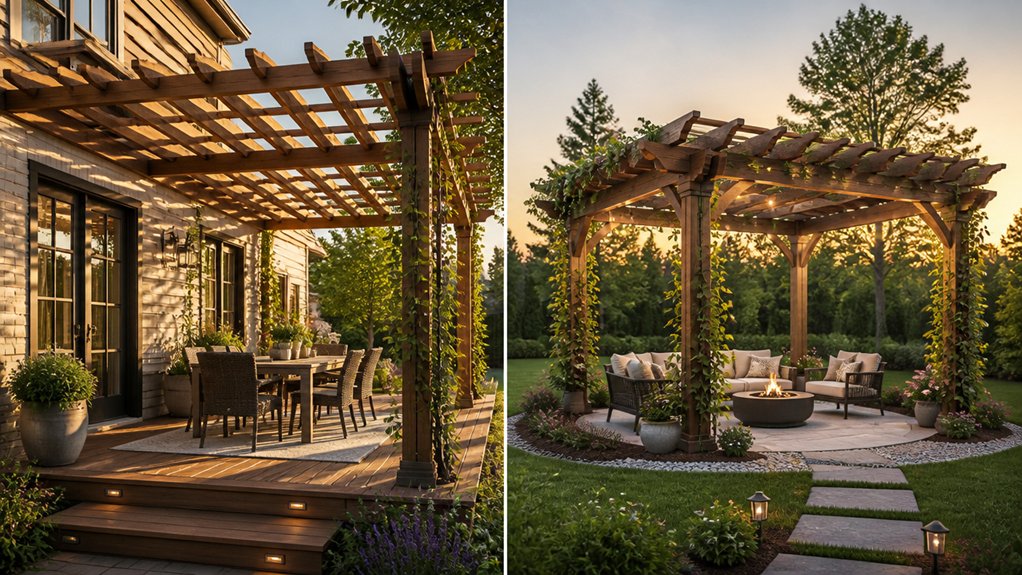
Choosing between an attached and freestanding pergola shapes how you’ll enjoy your outdoor space for years to come. An attached structure becomes a seamless extension of your home, creating a natural transition from indoors to out.
Freestanding designs, meanwhile, offer the freedom to place shade exactly where you want it in your yard.
Installation demands differ notably between the two styles. Attached pergolas require careful integration with existing walls and roofs, often needing permits and professional help.
Freestanding versions generally simplify the building process since they only need level ground and solid footings to take shape.
Cost considerations extend beyond the initial build. Attached pergolas may save on materials by using one wall for support, but structural modifications can drive up labor expenses.
Freestanding models typically need more complete frameworks, though they avoid potential home exterior complications down the road.
Design flexibility ultimately tips the balance for many homeowners. Attached pergolas suit those wanting cohesive architectural flow and protected dining areas near the kitchen.
Freestanding options excel for poolside retreats, garden focal points, or backyard entertainment zones set apart from the main residence.
Evaluating how you actually live outdoors reveals which approach deserves your investment.
How Attached and Freestanding Pergolas Differ Structurally
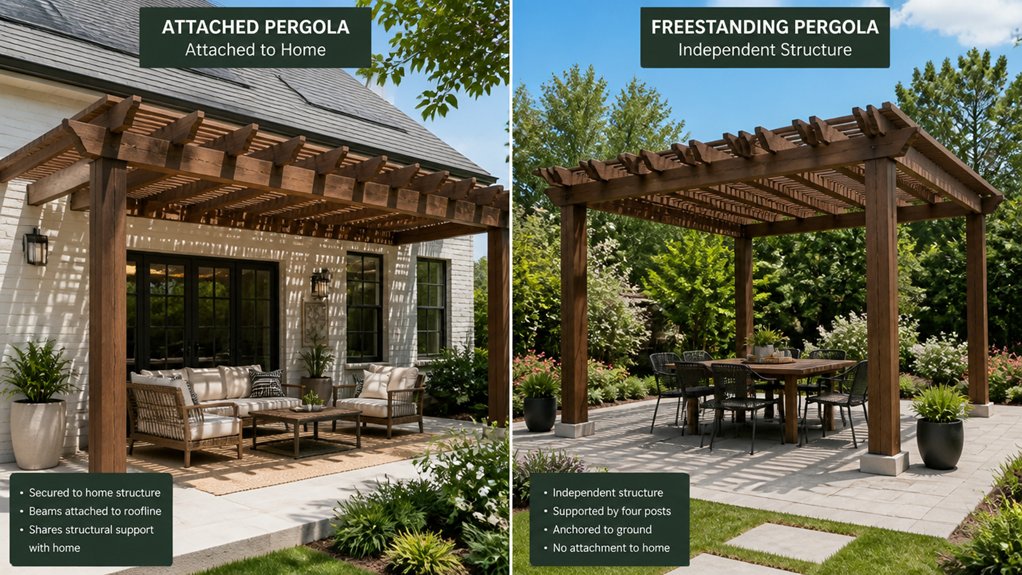
Attached and freestanding pergolas use very different support systems, foundations, and building methods. Both provide shade and style. But their structures are built in noticeably different ways.
How Attached Pergolas Work
These connect directly to your home or garage. One side leans on the existing wall for primary support. You typically need only two or three posts in the ground. Weight travels through the building’s wall or ledger board.
The connection point needs careful attention. Proper flashing keeps water out. Good waterproofing protects your home’s structure over time.
How Freestanding Pergolas Stand
These rest entirely on their own four corner posts. Each post gets its own concrete footing or ground anchor. Weight spreads evenly across all four supports.
Ground preparation matters greatly here. Every foundation must sit at the same depth. Consistency at each post keeps the structure level and secure.
What Installation Actually Involves
Installation procedures differ greatly between attached and freestanding pergolas. Each type needs its own tools, timeline, and site prep.
Attached pergolas connect directly to an existing structure. You’ll need to work with a house or garage wall. Careful measurement matters here. So does proper alignment with the building. Most jobs finish in one to two days. The work involves lag bolts, flashing, and ledger board attachment.
Freestanding units start from the ground up. You’ll dig foundation holes first. Then come concrete footings and vertical posts. Soil conditions affect your timeline. Post depth requirements do too. Most take two to three days total.
Both styles share some basics. Level ground is a must. Drainage needs proper planning. Check local building permits before you start any work.
Attached builds have clear advantages. They go up faster. But you need to verify the existing structure can handle the load.
Freestanding options give you more freedom. You can place them almost anywhere. That flexibility costs extra ground work though. The prep takes more time and effort on the front end.
Cost Comparison: What You’ll Actually Spend
Attached pergolas typically cost $2,000 to $5,000. They need less material and simpler foundation work. That alone saves time and money.
Freestanding models run from $3,000 to $8,000. They require independent supports and deeper footings. This pushes both material and labor costs higher.
Wood choice matters more than most people expect. Cedar and redwood sit at the top of the price range. Pressure-treated lumber keeps things affordable without sacrificing durability.
Custom designs can stretch your budget quickly. Standard kits keep spending predictable. Most big-box stores and online retailers stock plenty of options.
Labor usually adds $1,000 to $3,000 depending on where you live. Regional rates swing quite a bit, so local quotes are essential.
Don’t forget the extras. Permits, hardware, and finishing treatments all add up. Some areas require inspections by code, which brings surprise fees.
Get at least three contractor quotes before committing. Comparing numbers side by side prevents costly assumptions.
A realistic budget upfront protects you later. Mid-project shortfalls create stress no homeowner needs.
Maintenance and Longevity: Which Lasts Longer?
Durability differs between attached and freestanding pergolas. Exposure and structural design play big roles.
Attached pergolas connect to your home. They share some protection from walls and roofs. This shared shelter helps them last longer.
Freestanding structures face full weather exposure. Rain, wind, and UV damage hit them from every side. Wear tends to speed up on all surfaces.
—
Wood pergolas need staining or sealing every 2-3 years. This prevents rot and splintering over time.
Vinyl and composite options need less work. Occasional cleaning usually keeps them looking good.
Metal pergolas resist rot naturally. Still, proper coating matters to prevent rust.
—
Typical Lifespan
Freestanding pergolas usually last 10-15 years with standard care. Attached versions often reach 15-20 years thanks to reduced exposure.
Material quality makes a real difference for both styles. Your local climate also plays a key role in how long your pergola will stand strong.
Design Flexibility and Placement Options
Attached and freestanding pergolas differ quite a bit in how you can place and design them.
An attached pergola connects right to your home. You will need a suitable wall and solid existing structure. It becomes part of your house architecture, so you cannot move it later. Plan carefully around rooflines, windows, and foundation placement.
A freestanding pergola gives you more freedom. Place it anywhere in your yard, garden, or patio. No structural ties mean you can relocate it if your landscaping or property plans change.
Design options follow this same pattern. Attached structures must match your home style and materials. Freestanding ones let you choose size, color, and architectural style independently.
Budgets differ too. Aattached pergolas need professional assessment of your home structure. This can raise costs. Freestanding options install more simply with fewer structural requirements.
Choosing Based on Your Budget, Space, and Lifestyle
Choosing Based on Budget, Space, and Lifestyle
Think about your money, your yard, and how you live. These three things will point you toward the right pergola.
Budget First
Attached pergolas usually cost less. They lean on your house for support, so you need fewer materials. Freestanding ones stand alone. That means more parts and more work.
Five thousand dollars often covers an attached model. Ten thousand opens up freestanding choices.
Space Limits
Small yards work well with attached designs. A ten by twelve foot footprint fits nicely against your home.
Freestanding pergolas need breathing room. Plan for at least fifteen by fifteen feet of open space on every side.
How You Live
Love hosting big groups? Freestanding pergolas create special spots away from the house. The separation feels like a true destination.
Need shade over your patio? Attached pergolas deliver that directly. You step outside and you’re already there.
Match your choice to what matters most. The perfect fit comes from honest answers about cash, square footage, and daily habits.
Your Pergola Decision Checklist
Space Considerations
Measure your outdoor area carefully. Account for the pergola’s footprint plus clearance around it. You need room to walk, move furniture, and enjoy the space.
Budget Basics
Attached pergolas usually cost less than freestanding ones. Know your price range early. This shapes every other choice you’ll make.
Purpose and Function
What do you want from this structure? Shade for hot afternoons, a trellis for climbing vines, or simply a beautiful focal point? Your answer guides the design.
Climate and Materials
Your local weather affects how long materials last. Rain, snow, and strong sun wear on wood, metal, and vinyl differently. Some options need more upkeep than others.
Placement Options
Look at your home’s layout. Can you anchor a pergola to an existing deck or wall? Or does a standalone piece work better for your yard?
Rules and Regulations
Check local building codes before you buy. HOA rules might limit height, placement, or style. Permits may be required. Handle this step early to avoid headaches later.
Long-Term Thinking
Be honest about how much maintenance you can handle. Also ask if you might expand or change the structure someday. Your future self will thank you for planning ahead.
Frequently Asked Questions
Can I Convert a Freestanding Pergola Into an Attached Pergola Later?
Yes, converting a freestanding pergola into an attached one is feasible. One would need to assess the structure’s condition, guarantee proper foundation alignment with the house, and securely fasten it to the building’s exterior wall using appropriate brackets and anchors for stability.
Do Pergolas Require Permits or Homeowner Association Approval Before Installation?
Most jurisdictions require building permits for pergolas, particularly attached structures. Homeowner associations often mandate approval before installation. Requirements vary by location and pergola specifications, so homeowners should consult local building departments and HOA guidelines beforehand.
Which Pergola Type Provides Better Shade and UV Protection?
Notably, both types offer comparable shade, though attached pergolas often provide superior UV protection due to their proximity to existing structures. Freestanding models excel in flexibility, positioning themselves wherever sunlight angles prove most problematic throughout the day.
Can Pergolas Support Hot Tubs, Heavy Planters, or Additional Structures?
Pergolas can support hot tubs and heavy planters, but structural capacity depends on construction quality and foundation strength. Freestanding models require deeper footings, while attached pergolas leverage existing home structures for enhanced load-bearing capability.
What Climate Conditions or Weather Events Damage Pergolas Most Severely?
Heavy snow accumulation, intense wind storms, and prolonged moisture exposure damage pergolas most severely. UV radiation causes wood deterioration, while freeze-thaw cycles crack materials. Poor drainage creates rot, and hail impacts can splinter wooden beams considerably.
Conclusion
Selecting between attached and freestanding pergolas requires weighing several factors: budget constraints, available space, maintenance capacity, and desired aesthetics. Attached models offer cost savings and durability, while freestanding versions provide placement flexibility and design freedom. Homeowners shouldn’t put all their eggs in one basket by choosing solely on price or appearance. Instead, evaluate structural needs, long-term upkeep, and how each option functions within the existing landscape to make an informed decision.