
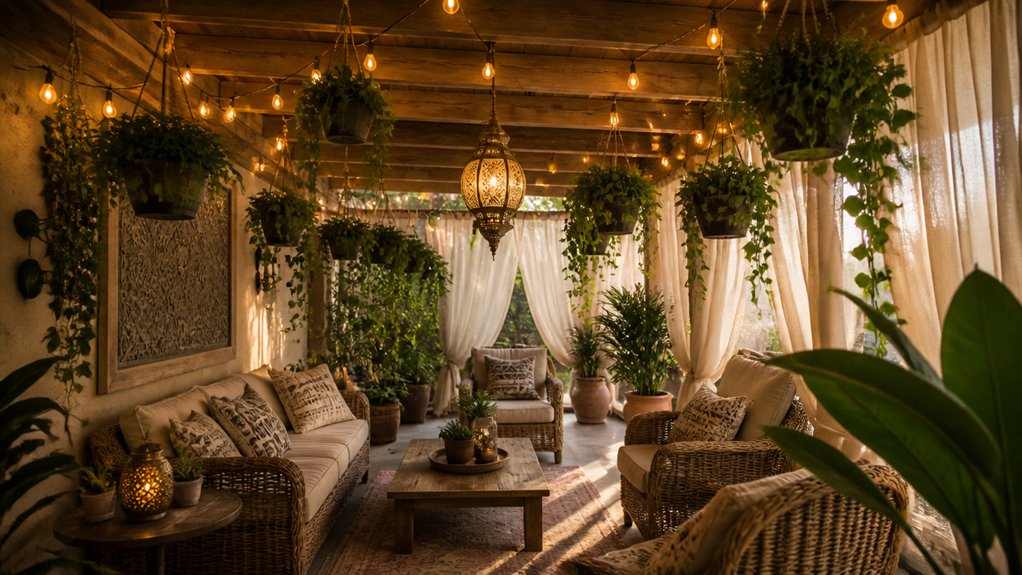
A low patio roof presents unique design challenges that demand careful planning and strategic thinking. The limited vertical space requires you to pay close attention to how you treat the ceiling, select furniture, and position lighting throughout the area.
Making thoughtful choices about color, height, and spatial arrangement can turn a cramped overhead space into something functional and visually appealing.
Ceiling treatment is often overlooked but makes a significant difference in how spacious your patio feels. Light colors and reflective finishes can help bounce light around and create an illusion of greater height, while avoiding dark paint or heavy materials that might feel oppressive.
Furniture selection matters more than you might think when working with limited headroom. Keep pieces low-profile and streamlined to maintain sightlines and prevent the space from feeling cluttered.
Multifunctional furniture also helps maximize usability without overwhelming the area.
Strategic lighting placement can enhance both the ambiance and perceived spaciousness of your low patio roof. Wall-mounted fixtures and recessed lighting work better than hanging pendant lights, which can feel intrusive in tight overhead spaces.
Layering different light sources creates depth and makes the entire area feel more welcoming and intentional.
Start With Your Ceiling: The Foundation of a Low-Patio Design
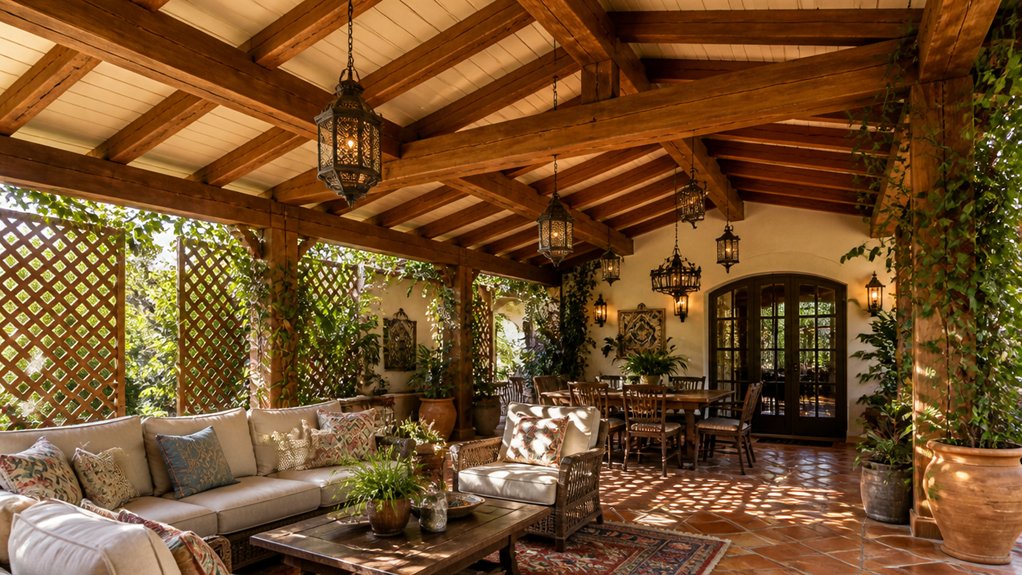
Your patio’s ceiling sets the tone for everything else. It’s the first thing that shapes your design choices, from furniture to lighting and décor.
Height and Materials Shape Your Space
The overhead surface directly impacts what works below it. Low ceilings need careful planning to avoid safety issues and visual clutter. Hanging items like fixtures and plants require proper clearance.
Your material choice matters too. Wood beams, metal panels, and stucco finishes each create a different feel and affect how the space looks overall.
Color Makes a Real Difference
Light shades like white and pale gray open up low spaces visually. They bounce light around and make the area feel taller than it actually is. Dark colors do the opposite and can feel cramped.
Texture Affects Light and Function
Smooth ceilings reflect light throughout your patio. Textured finishes tend to soak it up instead. Knowing this helps you pick the right materials from the start.
Once you nail down these basics, choosing furnishings, colors, and accessories becomes easier. Your ceiling work sets up everything that comes next.
Choose Light Colors and Strategic Accents to Expand the Space
Light colors like cream, soft gray, and pale blue work wonders on low ceilings. They bounce light around the room and make everything feel taller and airier.
Dark accents keep things interesting without closing in the space. Try a deep-colored accent wall, rich furniture pieces, or bold patterned cushions. These elements draw the eye down and away from that low ceiling.
Metallic finishes add brightness without feeling heavy. Think shiny railings, polished light fixtures, or gleaming accessories. Warm or bleached wood tones pair beautifully with your light color scheme too.
Paint your ceiling white or off-white. This simple step makes a real difference in how close that ceiling feels to your head.
Low-Profile Lighting: Maximize Your Vertical Space
Overhead fixtures eat up clearance fast on low patio roofs. Instead, try wall-mounted sconces, recessed lights, and strip lighting along beams. These choices direct light horizontally or upward, so you keep precious headroom for moving around comfortably.
LED strip lights under eaves create a soft glow while staying flat against surfaces. Recessed ceiling fixtures tuck directly into your roof structure without sticking down. Eye-level wall sconces work great for lighting seating areas.
Ground-level solar lights and uplighting around plants add visual interest without overhead clutter. String lights hung horizontally between posts bring ambiance with almost no vertical footprint. Battery-powered spotlights on landscape features skip wiring hassles entirely.
Furniture Choices for Low-Overhead Patios
Furniture Choices for Low-Overhead Patios****
Low patio roofs need furniture that stays grounded. Pick sectional sofas with low backs to keep sightlines open and maintain comfort. Lounge chairs around 28 inches high fit naturally under restrictive ceilings. Keep coffee tables under 16 inches tall so they don’t clutter your view.
Smart Furniture Arrangement
Position pieces parallel to your patio edge. This maximizes usable space and improves how people move through the area. Skip tall bookshelves, hutches, and standing storage units entirely.
Furniture Options That Work
Ottomans do double duty as seating and tables. Bench seating along perimeter walls saves space. Floor cushions let you rearrange easily. Modular pieces adapt to fit your layout.
Design Details Matter
Furniture with clean lines keeps the space from feeling cramped. Minimal ornamentation prevents visual overwhelm in tight quarters.
Vertical Décor Ideas for Covered Patios
Make the Most of Your Walls and Ceiling
Hanging planters suspended from beams or rafters bring greenery into your space without taking up floor room. Wall-mounted shelves work great for plants, decorative pieces, and outdoor books. Overhead string lights add soft lighting and draw the eye upward to your ceiling.
Creative Ways to Add Greenery and Color
Tiered planters and wall pockets let you grow more plants in less space. Tapestries or outdoor fabric panels on walls introduce color and pattern instantly. Try climbing vines on trellises for natural texture and movement.
Quick Vertical Solutions to Try
Hanging baskets filled with trailing plants add dimension. Wall sconces provide both light and style. Mounted artwork designed for outdoor use personalizes your patio. Mirrors on vertical surfaces bounce light around and make your space feel bigger.
Keep Your Floor Open and Inviting
These vertical touches enhance your patio’s look and feel without cluttering the ground. You get more beauty and function while keeping your walking and sitting areas clear.
Create Intimate Gathering Zones Within Your Covered Space
Splitting up a large patio makes conversations flow naturally and gives people a cozy feeling. This works especially well when you have a low roof that limits tall décor options.
Ways to Define Your Zones
Arrange furniture clusters at different spots from the entrance. Think dining sets in one area and lounge groupings in another.
Outdoor rugs do double duty. They anchor each seating area and signal visual boundaries to your guests.
Planters, screens, or low fencing separate spaces nicely without blocking views. People can still see across the patio while feeling in their own corner.
Lighting Sets the Mood
Pendant lights or string lights above each seating cluster create separate atmospheres. Different lighting for different zones makes each spot feel intentional.
Why This Approach Works
Your guests naturally gather in defined spots instead of spreading out awkwardly. Multiple gathering points let you host different activities at once. Someone can enjoy quiet conversation while others play games nearby. Smaller groups also feel less swallowed by an empty, sprawling space.
Finishing Touches: String Lights, Planters, and Minimal Clutter
String lights make a big difference in low patios. Hang them at angles or let them drape loosely across the ceiling for soft, ambient lighting. You won’t need to install anything into the roof structure. Warm white bulbs set a cozy tone perfect for evening hangouts.
Add greenery with planters positioned at corners and along edges. This keeps your patio feeling open even with a low ceiling. Pothos and ferns are ideal choices since they stay compact in smaller spaces.
Clutter steals valuable space in confined areas. Set up designated storage spots for cushions, toys, and décor. Your surfaces should stay mostly clear with just essential furniture and one or two decorative pieces on display.
These details work together seamlessly. Your patio becomes a functional outdoor room that feels both comfortable and visually appealing.
Frequently Asked Questions
What Budget Should I Allocate for a Low Patio Roof Decoration Project?
One should allocate between $500 to $3,000 for a low patio roof decoration project. The budget depends on project scope, material quality, and whether professional installation is required. Smaller accent projects cost less than extensive renovations.
How Do I Address Moisture and Mold Issues Under Covered Patios?
Homeowners should guarantee proper ventilation and drainage to prevent moisture accumulation. Installing vapor barriers, using mold-resistant materials, and applying protective sealants help combat mold growth. Regular inspection and maintenance, including cleaning gutters and removing debris, are essential preventative measures.
Can I Install a Ceiling Fan Under a Low Patio Roof Safely?
Yes, ceiling fans can be safely installed under low patio roofs. One should guarantee adequate clearance from the roof structure, proper electrical wiring, and secure mounting to withstand outdoor elements and wind resistance.
What’s the Best Way to Weatherproof Decorations for Outdoor Covered Spaces?
One might wonder whether ordinary decorations survive outdoor elements. The answer lies in selecting marine-grade materials, applying protective sealants, and using UV-resistant fabrics. These proven methods guarantee decorations endure harsh weather conditions indefinitely.
How Do I Maintain My Patio Decorations Throughout Different Seasons?
One maintains patio decorations seasonally by storing delicate items during harsh weather, rotating décor to match seasons, and regularly cleaning surfaces to prevent deterioration. Covering pieces with protective materials extends their lifespan year-round.
Conclusion
Transforming a low patio requires deliberate choices about color, furniture, and lighting. Light paints, low-profile seating, and vertical décor create functional, spacious-feeling areas. Wall sconces and LED strips provide ambient illumination without consuming headroom. Strategic arrangement of planters, string lights, and minimal accessories completes the design. Yet the true measure of success remains unclear until occupants gather beneath the roof, experiencing whether these choices actually deliver the intended comfort and atmosphere.